
Ask three suppliers for the iodine content of their bladder wrack powder and you can get three answers that hardly look like the same ingredient. A few hundred ppm in dried powder. Well over a thousand in some concentrated extracts. Same seaweed, Fucus vesiculosus, same product name.
Seaweed is not like a leaf or a root. It lives in the sea, and the sea changes by place and by season.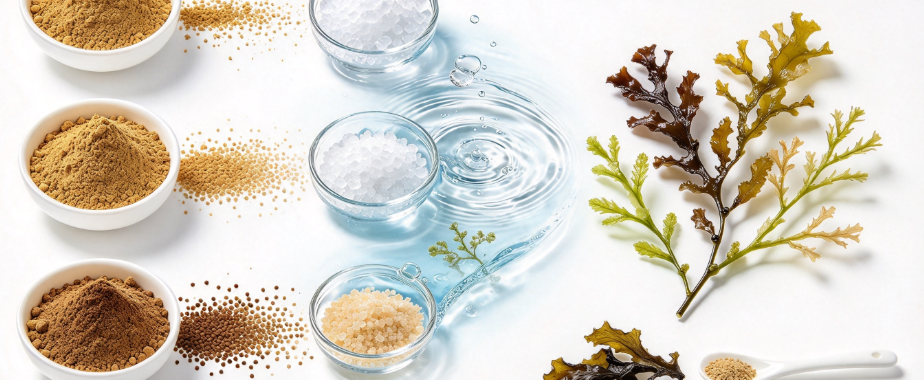
The plant takes iodine straight from seawater. Harvest location, depth, season and the part of the plant all move the number. Washing and drying change it a little more.
Because most bladderwrack is wild harvested, no two lots are identical. The figure on a spec sheet is really a range you need to agree on, not a fixed fact. Many markets set limits and labeling rules for iodine in seaweed products, so check the rules for yours before you finalize a formula.
Ask for iodine by lot, measured by titration or ICP-MS, and write the target range into the purchase agreement.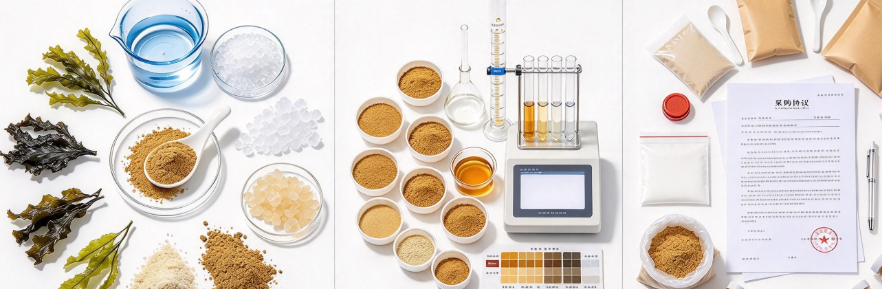
Metals. Seaweed picks up arsenic, cadmium, lead and mercury from its surroundings. Specs commonly seen are total heavy metals of 10 ppm or less, lead around 0.5 ppm and arsenic around 1 ppm, but the right limit depends on your market. Insist on lot specific ICP-MS results, not a yearly summary.
Ash is a useful clue. High ash can mean leftover salt or sand from poor washing. One supplier treats anything above 10 percent as a red flag, and that is a fair rule of thumb.
Origin matters too. Cold North Atlantic coasts are the usual benchmark for quality, with seaweed hand harvested at low tide, washed and dried before milling.
Powder is the dried, milled plant. It keeps the fiber and minerals and has a mild sea smell. It is the form used in cosmetic masks, scrubs, bath salts and body wraps, and in seasoning and soup blends.
Bladderwrack extract is concentrated, sold on a ratio such as 4:1 or 10:1 or on a marker like iodine. It is more soluble and milder in flavor, which suits capsules, tablets and drink formats. A ratio is not a marker, so do not compare the two on price alone.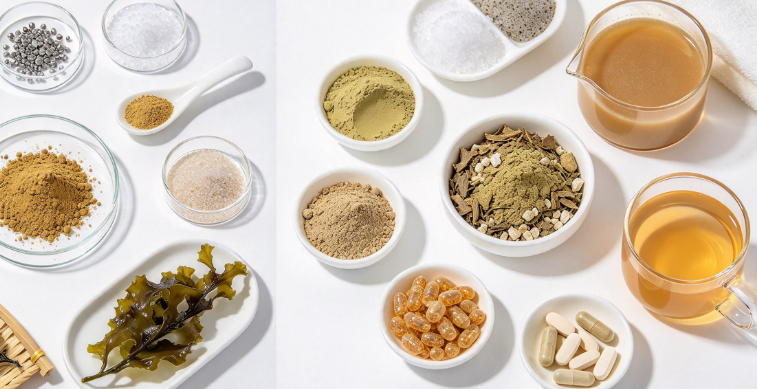
Botanical name and plant part, in writing. Harvest region and method. The iodine range. Heavy metals per lot, plus ash, moisture, mesh size (80 mesh is common), bulk density and microbial results.
Seaweed powder attracts moisture, so a moisture barrier bag is not optional. Order a small trial lot and check color, smell and flow before committing to volume.
Why does iodine differ between lots?
Seaweed absorbs iodine from seawater, so harvest place, season and plant part change it. Ask for lot specific results.
Which heavy metal needs the closest attention in seaweed?
Arsenic, along with cadmium, lead and mercury. Request lot specific ICP-MS results rather than a yearly summary.
Is wild harvested the usual source?
Yes. Most material is hand harvested from cold Atlantic coasts, then washed and dried before milling.
If you want a seaweed powder with the lot data to back it up, take a look at our premium bulk bladder wrack powder. We supply it with complete COA documentation and clearly defined product specifications. Sample requests and quotes are available directly from our sales team.





