
A buyer I know picked up a sample of lotus seed extract last spring because her client wanted a calm-positioning bedtime drink. The supplier sent a beige powder, a one-line spec, and a photo of a lotus pond that looked like it came off a stock site. She almost approved it. Then her R&D lead asked one question: “Where’s the COA, and is this extract or just milled seed?” The supplier went quiet for two days. That silence saved her a container.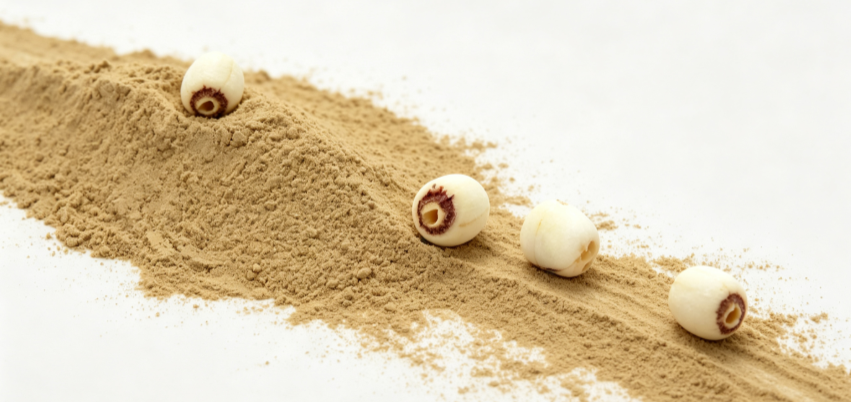
Here’s the thing most people miss. Lotus seed is a food first — the starchy seed inside Nelumbo nucifera, eaten in congee, desserts, and herbal soups across Asia for centuries. When you buy it whole or as lotus seed powder, you are buying a whole-food ingredient: starch, protein, some minerals, a mild nutty flavor, and not much else concentrated. It is fine for food blends and traditional recipes. But a true lotus seed extract goes through water or hydroalcoholic extraction, concentration, and spray drying to pull and standardize the actives — mainly lotusine, nuciferine, and the alkaloid/flavonoid fraction that supplement brands actually care about. Same plant, completely different product, completely different price.
The mix-up happens constantly because the supply chain is loose. A trader lists “lotus seed extract 10:1,” ships what is essentially dried, milled lotus seed, and the buyer never notices until the capsule line tastes like unsweetened congee. Or worse, they notice because the alkaloid marker they were promised doesn’t show up on HPLC. If you are sourcing for a lotus seed supplement — sleep blends, calming formulas, functional beverages — you need the COA to say three things clearly: botanical name (Nelumbo nucifera seed), extract ratio or standardized marker (lotusine or total alkaloids by HPLC), and the usual safety panel (heavy metals, pesticide residue, microbes, moisture, mesh).
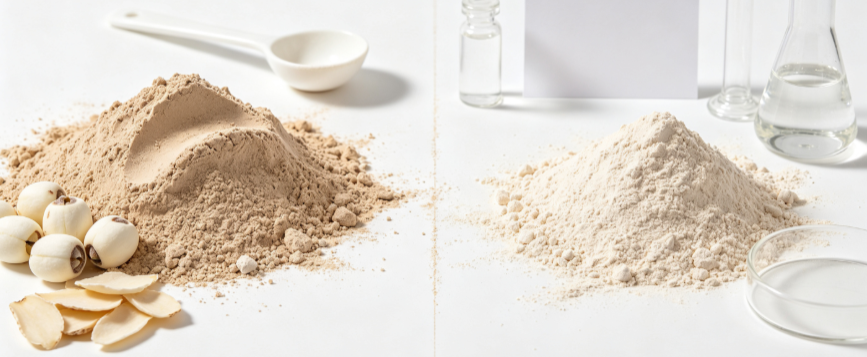
Buying whole seeds is its own trap. When teams Buy lotus seed online for food production or for in-house extraction, the listing photos are always gorgeous — white, plump, “hand-harvested from Dongting Lake.” What arrives is often smaller grade, high moisture, and sometimes treated for shelf life without declaration. Ask for the harvest region (Hunan, Jiangxi, and Fujian are the usual honest answers), moisture spec, and aflatoxin testing. Lotus seed is a starchy nut-like seed; if storage is sloppy, mold toxins show up fast and customs will find them before your customer does.
The practical filter I use is boring but it works. Three consecutive batch COAs, not one. Latin name on every page, not just “lotus.” Marker assay by HPLC if it is an extract, not a UV “total flavonoid” hand-wave. A factory that will show the extraction tanks and the spray dryer, not just a trading-office photo. And a small trial lot run through your own lab before the container ships. A real manufacturer welcomes that. The ones who push back with “we’ve never had a complaint” are the ones you walk away from.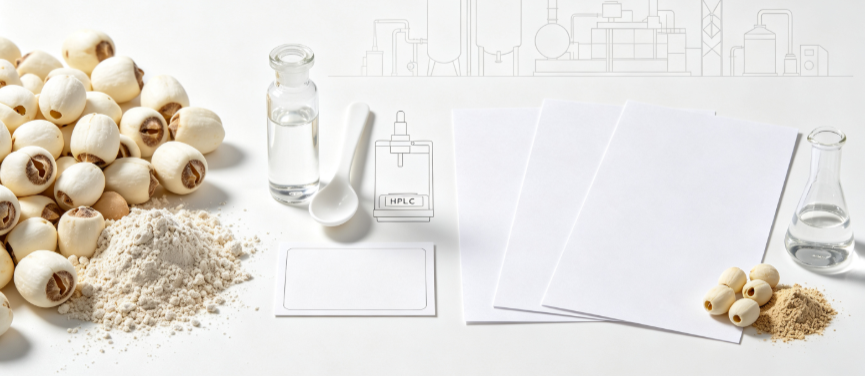
At the end of the day, lotus works beautifully when the grade matches the job — whole seed for food, powder for blends, standardized extract for supplements. The problem is never the plant. It is the gap between what the listing says and what is in the drum. Close that gap with paperwork and a sample test, and the rest is easy.





