
Almost every matcha quote we see says ceremonial somewhere. Some of it is lovely. Some of it is a duller powder wearing a nicer name tag. Nobody polices the word, so nobody catches it. Then a cafe owner wonders why the latte looks like pond water.
So how do you tell Matcha Powder worth paying for from the other kind? You stop reading the label and start asking for the things behind it.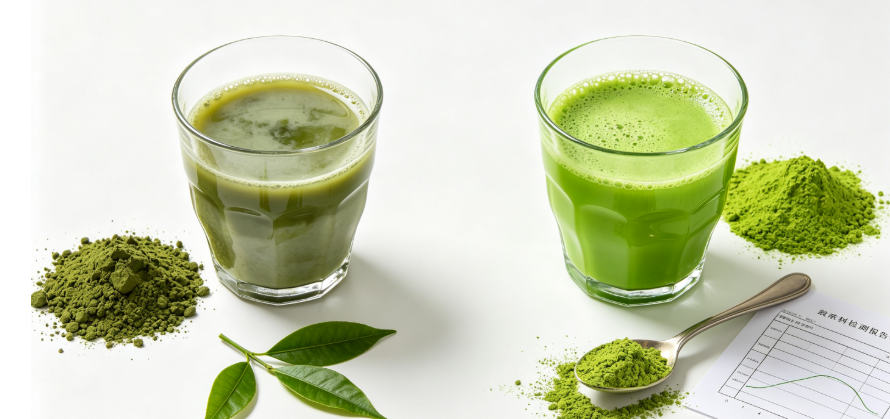
Ceremonial, culinary, barista, ingredient. These are words suppliers use to describe color, texture and flavor behavior. None of them tells you how the tea was grown, how it was milled or what is on it. Ask for these instead:
Japan has the longer history of shade growing and stone milling, which is why it commands the premium. Chinese producers, many in Zhejiang, have been catching up with tencha style processing. Skip the flag debate and judge the lot in front of you.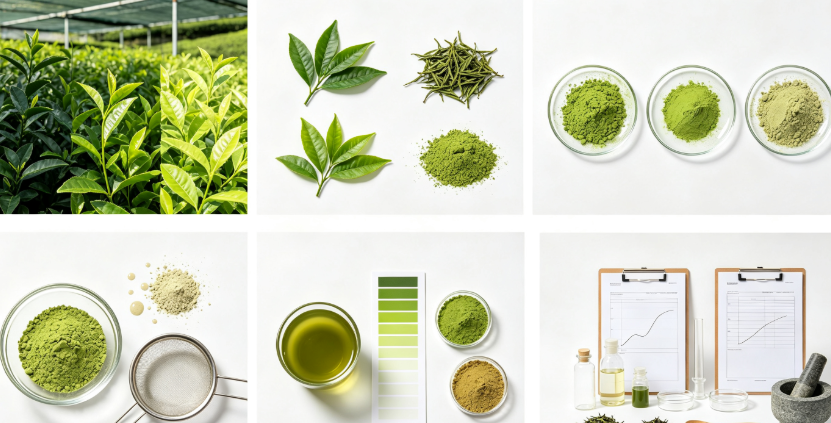
For a latte or a whisked bowl, you want a smooth, sweet cup. If you are chasing the best matcha powder for a drink program, that means first harvest, fine milled and bright. Particle size matters more here than anywhere, because your customer can see the sediment.
For baking, ice cream and noodles, the story flips. Milk, sugar and heat flatten flavor and dull color, so a stronger, slightly bitter culinary grade, usually from a later harvest, holds up far better than an expensive ceremonial that disappears into butter. Chlorophyll turns olive with heat and acid, so bake a test batch at the real oven temperature before you scale.
For capsules, tablets and drink sticks, a matcha extract is a different option. It is concentrated, dissolves better and is sold on a ratio or a marker. It does not look or taste like whole leaf powder, and it is not a cheaper matcha. Treat it as its own ingredient on the purchase order.
One last thing. Matcha fades with light and oxygen. Ask for the packing date, sealed foil packaging and a cool, dark storage room, and open as little as you can.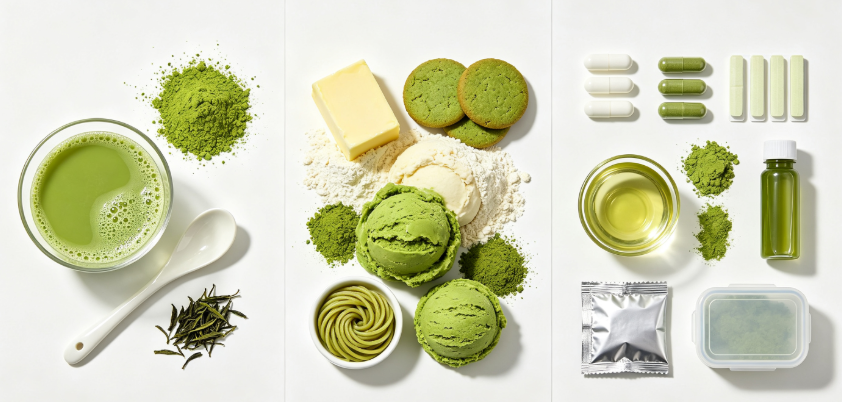
If you want to buy matcha powder with the harvest, particle size and pesticide data on paper, send us your use case and we'll suggest a grade. You can start with our premium bulk matcha powder. We supply it with complete COA documentation and clearly defined product specifications. Sample requests and quotes are available directly from our sales team.





