
If you have sourced luoshen flower extract for any length of time, you have probably noticed the color inconsistency. One shipment comes in deep crimson. The next batch is noticeably lighter. The anthocyanin number on the COA looks similar but the finished product behaves differently. Customers notice. Quality control flags it. And the conversation with the supplier goes nowhere useful.
This is not random. There are specific, identifiable reasons why roselle extract varies the way it does, and knowing them changes how you evaluate suppliers.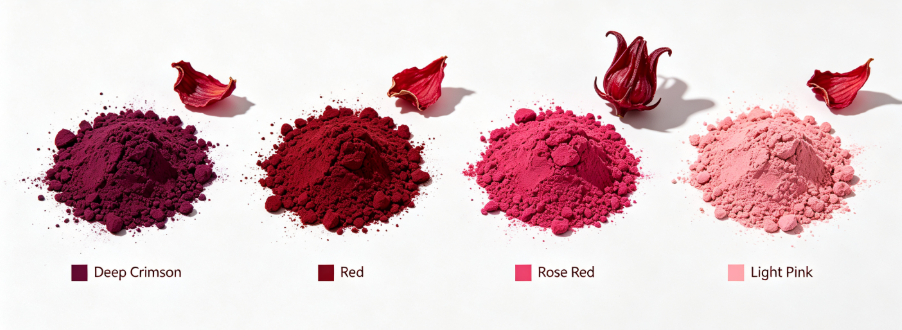
Luoshen flower, roselle, and Hibiscus sabdariffa are all the same plant. Luoshen is the Chinese name. Roselle is the international common name used in most English-language markets. Hibiscus sabdariffa is the botanical name that should appear on any serious COA.
This naming confusion causes real problems in procurement. A buyer searching for luoshen flower extract in Chinese supplier databases and roselle extract in English-language catalogs is often looking at the same ingredient from different angles without realizing it. More importantly, "hibiscus" as a search term returns results for multiple different Hibiscus species — including Hibiscus rosa-sinensis, which is an ornamental plant with a completely different compound profile. Always verify the Latin name is Hibiscus sabdariffa before proceeding with any roselle extract supplier.
The part that matters commercially is the calyx — the fleshy red structure surrounding the seed pod, not the petals. Calyx-derived extract is what produces the standardized anthocyanin and organic acid content that makes luoshen flower extract commercially valuable. Suppliers using mixed plant parts or petals produce a lower-quality, less consistent material.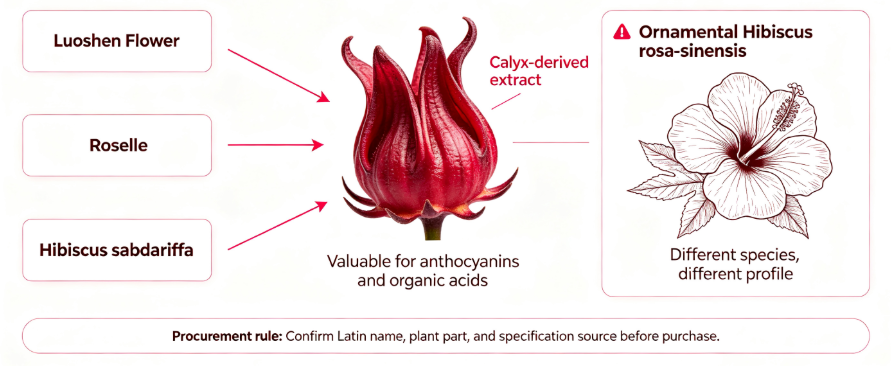
Anthocyanin content in raw roselle calyx ranges from 1.5% to 3.0% dry weight depending on cultivar, growing region, and post-harvest handling. That is a two-fold variance in the starting material before any extraction happens. When a supplier is sourcing from multiple farms or mixed origins without controlling raw material quality, that variance flows directly into the finished roselle powder.
Harvest timing is the single biggest driver of quality inconsistency. Calyces harvested at peak maturity — typically when the calyx has fully swollen and deepened in color after the flower drops — contain the highest anthocyanin concentration. Early harvest produces lighter, lower-potency material. Suppliers who do not control or even track harvest timing from their raw material base cannot deliver consistent anthocyanin levels across batches, no matter what they claim about their extraction process.
Post-harvest handling is the second variable. Roselle calyces are high in moisture and degrade rapidly if not dried promptly after harvest. Sun drying is common in major producing regions but leaves calyx exposed to UV light and temperature fluctuations that degrade anthocyanins. Low-temperature mechanical drying preserves color and potency significantly better. A supplier who can specify their raw material drying method and temperature range is demonstrating traceability that most buyers never think to ask for.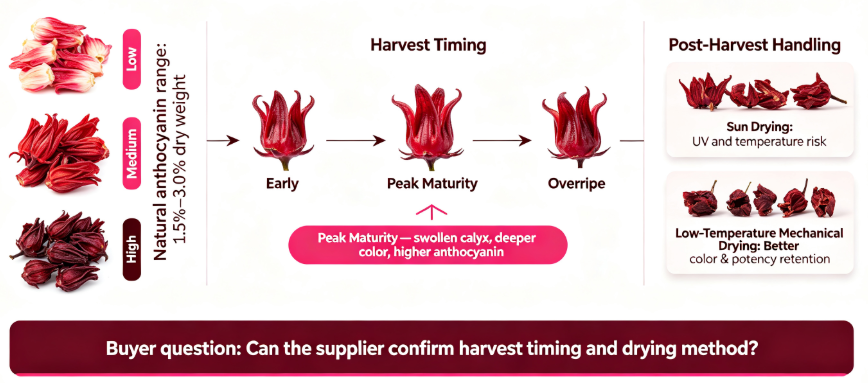
Beverages dominate the commercial volume. Roselle extract's vivid crimson color and tart, fruity flavor profile make it one of the most commercially useful natural colorants and flavor contributors in functional drinks, herbal teas, carbonated beverages, and ready-to-drink wellness products. The shift away from synthetic red and pink dyes is pushing food and beverage manufacturers toward hibiscus-derived ingredients, and this segment is growing faster than any other application category for roselle.
Food applications use roselle powder as both a natural colorant and acidulant in confectionery, jams, jellies, baked goods, and sauces. The high organic acid content — hibiscic acid, citric acid, and malic acid typically making up 15–30% of the dried calyx — contributes genuine flavor functionality beyond just color.
Dietary supplements are the third major segment. Luoshen flower extract in capsule and powder format appears in antioxidant blends and general wellness formulations. Anthocyanin standardization is the relevant spec for supplement applications, and buyers should request HPLC-verified anthocyanin content by batch rather than relying on spectrophotometric readings, which give less precise results for complex anthocyanin mixtures.
Cosmetics is a growing application. The anthocyanin and polyphenol fraction shows up in brightening serums, toners, and face masks particularly in Asian beauty markets where the ingredient has strong cultural recognition. Color stability in cosmetic formulations at varying pH is a key technical variable — anthocyanins are pH-sensitive and shift color across the pH range, which needs to be accounted for in formulation design.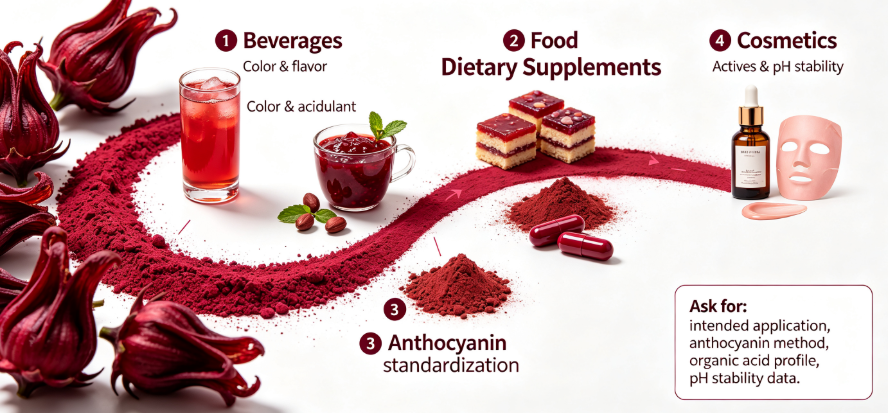
Thailand, China, Sudan, Nigeria, and Mexico are the main commercial production origins. Thai and Chinese producers dominate the supplement and food ingredient export market. Sudanese production is significant for dried calyx volume. Each origin has different quality profiles — Thai production is known for consistent calyx quality and processing infrastructure; Chinese production offers competitive pricing with more variable raw material quality depending on the supplier.
Color specification by batch is the most practical quality benchmark for buyers. A spectrophotometric reading at 520 nm on a dissolved sample gives a measurable color intensity value that correlates to anthocyanin content and can be compared between batches. Request this data alongside the standard anthocyanin percentage — the two together give a more complete picture than either alone.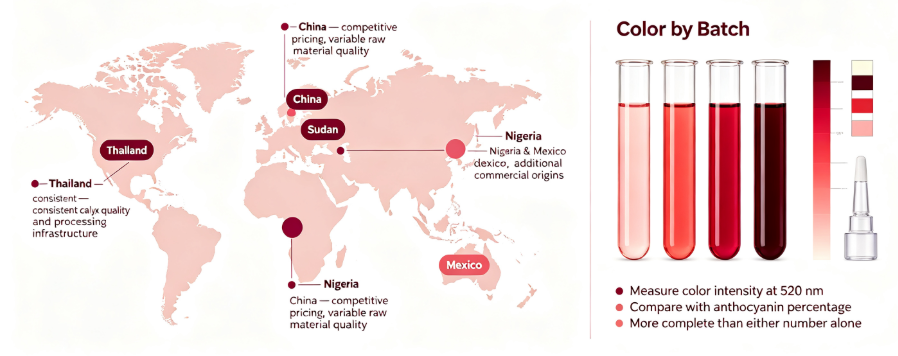
For EU market entry specifically, maximum residue level compliance for pesticides is worth confirming. Roselle is grown with varying pesticide practices across major producing regions, and lot-specific residue screening is the appropriate documentation standard for food-grade material entering European markets.
We supply luoshen flower extract with complete COA documentation and clearly defined product specifications. Sample requests and quotes are available directly from our sales team.





