
Most ingredient buyers treat apple extract as a single category. One apple, one extract, one COA. The reality is that green apple extract and red apple extract have meaningfully different polyphenol profiles, different flavor characteristics, and in some applications genuinely different functional properties. Sourcing one when you need the other produces a formulation that does not perform the way you intended.
Worth knowing before the purchase order goes out.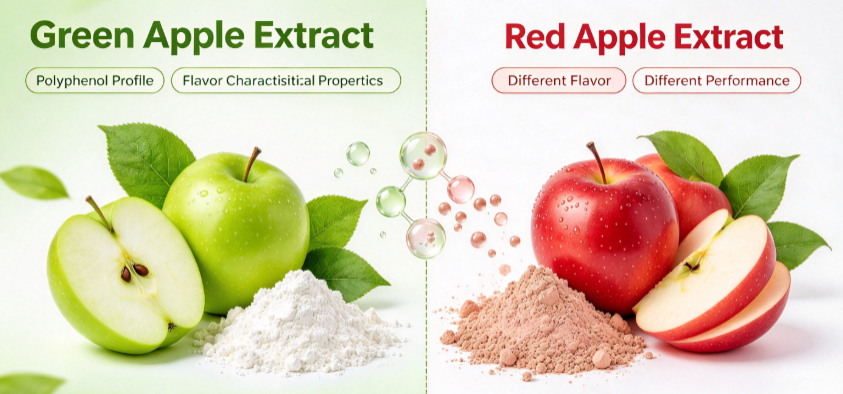
Green apple cultivars — primarily Granny Smith and similar varieties — have a higher chlorogenic acid content than red-fleshed or red-skinned varieties. Chlorogenic acid is the dominant polyphenol in apple extract and one of the primary active compounds for antioxidant applications. Green apples also carry higher malic acid concentration, which contributes the characteristic sharp, tart flavor profile that distinguishes green apple powder in food and beverage formulations from the milder, sweeter notes of red apple extract.
The anthocyanin picture is reversed. Red apple varieties — particularly the skin fraction — contain anthocyanins that give the fruit its color and contribute to the reddish-brown coloration of red apple extract. Green apples have minimal anthocyanin content. For applications where color from apple-derived anthocyanins is part of the formulation objective, green apple extract is not the appropriate material.
The peel-to-flesh ratio in the extract also matters. Green apple peel contains significantly higher polyphenol concentration than the flesh — some analyses show three to five times the chlorogenic acid content in peel versus pulp. Whole-fruit green apple powder includes both fractions. Peel-enriched extract concentrates the polyphenol content but changes the flavor profile, making it more bitter and astringent at higher inclusion rates.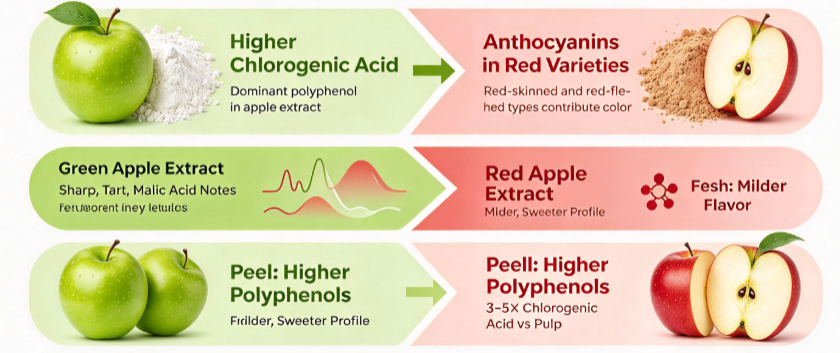
This is where sourcing conversations get imprecise fast.
Green apple powder made from whole fruit — skin, flesh, seeds — retains the complete nutritional and flavor profile of the fresh fruit. Spray-dried or freeze-dried, it is used in food applications where authentic apple flavor and full-spectrum nutrition matter. Fiber content is meaningful in whole-fruit powder. It is the closest thing to "fresh apple in powder form" and is used accordingly.
Green apple juice powder is spray-dried apple juice, typically with a maltodextrin carrier. Lower fiber content, better water solubility, cleaner flavor without the bitter notes from peel phenolics. For beverage applications and products where clean dissolution matters more than complete nutritional profile, juice powder is the right format. The carrier content should be specified — maltodextrin percentage in juice powder varies and affects the actual fruit content per gram.
Apple pomace extract is derived from the press residue left after juice production — primarily skins, seeds, and fiber. It is the highest polyphenol concentration source and the most cost-effective raw material for extracting chlorogenic acid and other phenolic compounds. Pomace-derived extract makes sense for supplement applications where standardized polyphenol content is the objective. The trade-off is flavor — pomace extract is noticeably more bitter and astringent than whole-fruit or juice-derived material, which limits inclusion rates in food and beverage applications.
Ordering "green apple extract" without specifying which of these three you need is the most common mistake in this category.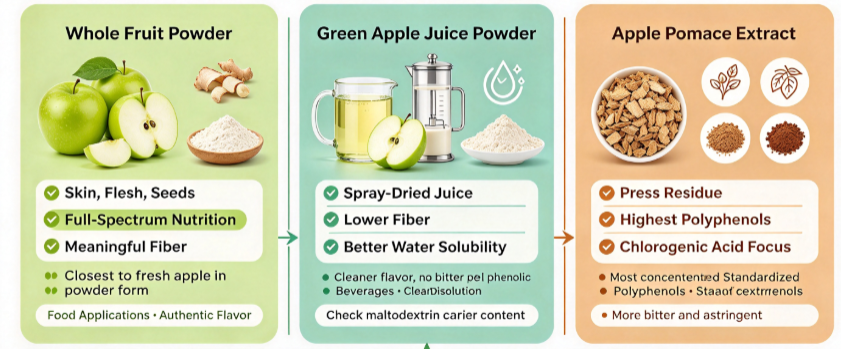
Functional food and beverage is the dominant application. Green apple juice powder in smoothie mixes, functional drink sachets, and protein powders delivers recognizable flavor with clean-label fruit positioning. The natural tartness of green apple works well in citrus-forward or berry formulations where a bright, acidic note is desirable. It also does double duty as both a flavor contributor and a natural vitamin C source on the nutrition panel.
Cosmetics and skincare is one of the fastest-growing segments for apple-derived ingredients. The malic acid content in green apple extract functions as a gentle chemical exfoliant, relevant for brightening serums, toners, and exfoliating masks. The polyphenol fraction contributes antioxidant activity relevant to anti-aging formulations. Apple stem cell extract — a distinct and more specialized ingredient derived from a specific Swiss apple cultivar — sits in a different category entirely and should not be confused with standard green apple powder.
Dietary supplements use apple extract standardized to polyphenol content — typically total polyphenols at 50–80% or chlorogenic acid specifically — in antioxidant blends and general wellness formulations. Pomace-derived extract is the most commercially practical source for standardized supplement applications given the higher starting polyphenol concentration in the raw material.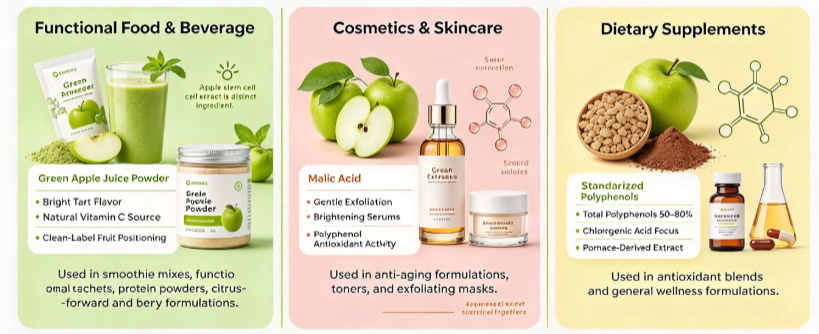
Cultivar disclosure matters for green apple applications. Granny Smith is the most widely used commercial cultivar for green apple extract production but other green varieties are used depending on availability and region. The polyphenol profile varies between cultivars, so batch consistency depends partly on raw material sourcing staying within a defined cultivar base. Ask your supplier whether they can specify the apple variety used in their extract production.
Seasonal supply variability is a real consideration. Apple harvest is annual and extract production is seasonal, which means inventory management matters for buyers with continuous production needs. Suppliers with cold-storage capacity for raw material can extend production through the off-season but at higher cost. Understanding your supplier's raw material sourcing model is relevant for planning purposes.
For organic green apple powder, certification documentation needs to cover the orchard through the processing facility. Apple is one of the most pesticide-intensive fruit crops in conventional agriculture, which makes organic certification particularly relevant for this ingredient in clean-label supplement and cosmetic applications.
We supply green apple extract with complete COA documentation and clearly defined product specifications. Sample requests and quotes are available directly from our sales team.





