
Sweet wormwood has been cultivated and used in traditional Chinese medicine for centuries. Today it sits at an interesting crossroads — one of the few botanical ingredients that spans from mainstream dietary supplements all the way to WHO-approved pharmaceutical manufacturing. That range creates a sourcing landscape where "artemisia annua extract" on a COA can represent very different things depending on who produced it and for what purpose.
Getting clarity on grade before placing an order is not optional here.
Sweet annie extract in the North American supplement market typically refers to a whole-plant extract standardized to a relatively low artemisinin percentage — often 0.3% to 1% — or sometimes just dried and milled artemisia annua powder with no standardization at all. These products sit comfortably within dietary supplement frameworks, require standard food-grade documentation, and are commercially accessible from a wide range of suppliers. The positioning is general wellness, antioxidant activity, and immune support — not artemisinin-specific pharmaceutical applications.
Pharmaceutical grade artemisia annua extract is a completely different procurement conversation. Artemisinin content at this level runs from 80% to 99% purity, production requires GMP-certified facilities, and the documentation chain — analytical methods, impurity profiles, residual solvents, stability data — matches pharmaceutical API requirements rather than supplement COA standards. Major pharmaceutical buyers including large contract manufacturers for artemisinin combination therapy drugs source material with multi-year supply agreements and committed volume quotas precisely because the qualification process is substantial.
Ordering supplement-grade material when pharmaceutical documentation is required, or paying pharmaceutical-grade prices for material that will go into a general wellness capsule, are both mistakes that happen when the grade question does not get resolved upfront.
Artemisinin is the sesquiterpene lactone endoperoxide that defines this plant commercially. It concentrates in the leaves and flower buds of Artemisia annua, with content in raw plant material typically ranging from 0.01% to 1.5% depending on cultivar, growing region, and harvest timing. That variance in raw material directly affects the yield and cost of finished extract.
Supercritical CO2 extraction is increasingly preferred for high-artemisinin pharmaceutical-grade production. It avoids solvent residues, operates at lower temperatures that preserve the compound's stability, and produces a cleaner extract profile than hexane or ethanol extraction routes. For supplement-grade artemisia annua powder, water and ethanol extraction are more common and cost-appropriate. Residual solvent testing is relevant for any hexane-extracted material going into food or supplement applications — something worth confirming before approval.
Harvest timing matters considerably. Artemisinin content peaks at early flowering stage — harvesting leaves before full flower development captures the highest concentration. Post-flowering material drops significantly in artemisinin yield. A supplier who specifies harvest stage in their raw material documentation is demonstrating meaningful quality control. One who cannot tell you when the plant was harvested is working with less traceability than serious sourcing requires.
Pharmaceutical applications represent the largest volume segment by far. Artemisinin and its semi-synthetic derivatives — artesunate, artemether, dihydroartemisinin — are the active ingredients in artemisinin combination therapies, the first-line treatment for Plasmodium falciparum malaria recommended by the WHO. This pharmaceutical segment involves major manufacturers with long-term contracts, rigorous supplier qualification, and supply chains that trace back to certified cultivation regions in China, Vietnam, East Africa, and Madagascar.
Dietary supplements are the fastest-growing segment commercially. Artemisia annua powder and lower-concentration extracts appear in immune support, antioxidant, and general wellness formulations. The ingredient is well-established in the US and European supplement markets, with regulatory status under DSHEA in the US and as a traditional herbal product in the EU.
Cosmetics is a smaller but active application. The antioxidant and anti-inflammatory properties of artemisia extract make it relevant for anti-aging serums and sensitive skin formulations, particularly in Asian beauty markets where botanical actives with traditional credentials carry strong positioning.
Agricultural applications are worth noting — artemisinin has demonstrated pesticidal activity and research into its use as a natural pesticide alternative is ongoing, representing a potential non-food commercial channel for lower-grade material.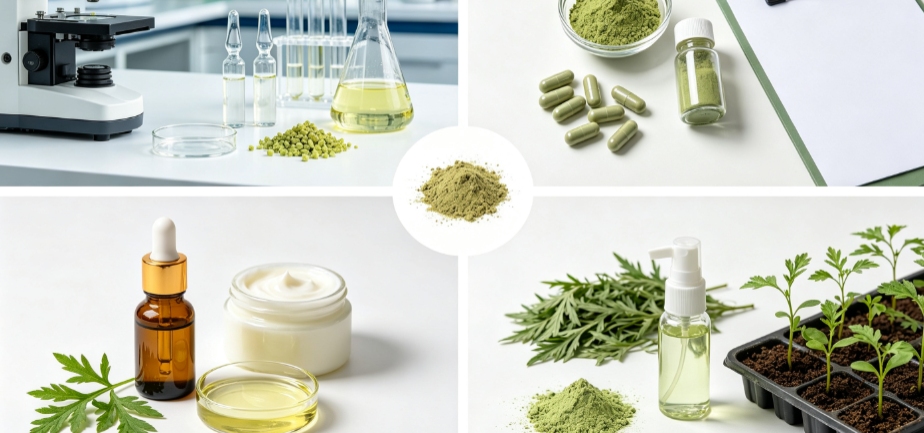
Cultivation origin affects both quality and supply reliability. China — particularly Chongqing, Guangxi, and Yunnan provinces — remains the dominant producer of artemisia annua for both pharmaceutical and supplement applications. East African producers including operations in Tanzania, Kenya, and Uganda have expanded capacity significantly, driven by international development programs supporting local artemisinin production. Each origin has different cost profiles, logistics considerations, and documentation norms.
For supplement buyers, confirming that the material is not sourced from pharmaceutical residue or processed artemisinin waste streams is a legitimate quality question. Some lower-cost supplement-grade material in the market originates from post-extraction plant residue that has already had the high-value artemisinin fraction removed for pharmaceutical use — the resulting material has a very different and unpredictable compound profile.
Stability is a genuine concern for artemisinin-standardized extracts. Artemisinin degrades under heat, light, and acidic conditions. Proper storage — cool, dark, moisture-barrier packaging — and documented shelf life data with stability testing at defined conditions should accompany any commercial shipment. A supplier who cannot provide stability data for an artemisinin-standardized product is not adequately characterizing their material.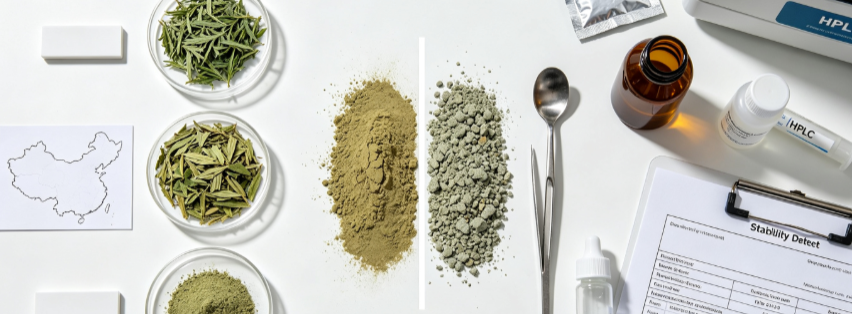
We supply artemisia annua extract with complete COA documentation and clearly defined product specifications. Sample requests and quotes are available directly from our sales team.


