The linden tree is one of those botanicals that has been part of European herbal tradition for centuries. Linden flower tea is still a household staple in large parts of Central and Eastern Europe. The commercial extract has been used in cosmetics, food flavoring, and herbal supplements for decades. None of that history makes sourcing it straightforward, because the moment you start comparing supplier COAs, the species names and spec formats diverge in ways that are easy to overlook and genuinely matter.
Tilia is a large genus with nearly 80 species. Commercial linden flower extract is produced from several of them, most commonly Tilia cordata, Tilia platyphyllos, Tilia tuan, and sometimes Tilia miqueliana. European buyers and herbal pharmacopoeia references tend to specify Tilia cordata and Tilia platyphyllos as the primary medicinal species — these are the two covered by the European Pharmacopoeia monograph for linden flower. Chinese production often uses Tilia tuan or Tilia miqueliana, which are native to central and southern China and represent the commercially available supply from that origin.
The practical question is whether species matters for your application. For finished products making herbal tradition claims tied to European linden — particularly in EU markets where pharmacopoeia compliance or traditional herbal registration is relevant — species documentation specifying cordata or platyphyllos matters. For general supplement or cosmetic applications where the botanical origin is listed as Tilia spp. and no specific pharmacopoeia standard is required, Chinese-origin material from Tilia tuan is a commercially practical and cost-effective option.
What is not acceptable is a COA that simply says "linden flower extract" without a species name. That is incomplete documentation regardless of application, and any serious linden flower manufactory should be able to specify the botanical source at minimum to species level.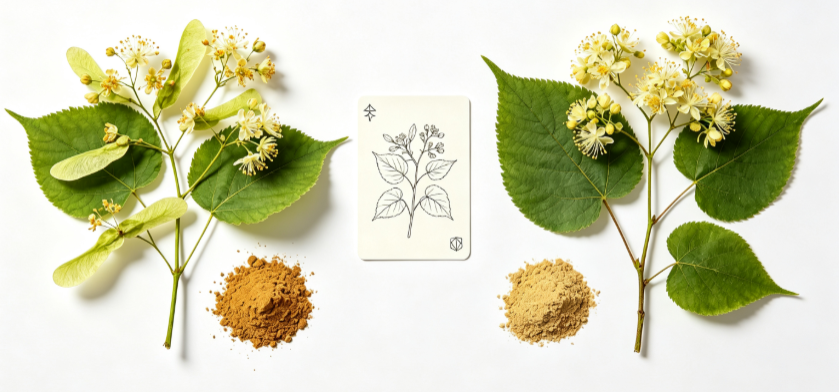
Most commercial linden flower extract is sold as either an extract ratio product or a flavone-standardized extract. These are not interchangeable formats and they serve different purposes.
Extract ratio — 4:1, 10:1, 20:1 — tells you how much raw flower material was concentrated into the finished powder. A 10:1 extract used ten kilograms of dried flower to produce one kilogram of extract. It does not tell you the actual concentration of any specific active compound. The flavonoid and volatile oil profile of the finished powder depends on the quality of the raw material and the extraction process, neither of which a ratio number captures. Extract ratio products are commonly used in traditional herbal supplement formats, teas, and food applications where a botanical whole-plant preparation is appropriate rather than isolated compound standardization.
Flavone-standardized extract — typically 5% flavonoids — quantifies the actual flavonoid content by HPLC or UV spectrophotometry. This is the appropriate format for cosmetic actives, pharmaceutical-adjacent applications, or any supplement formulation where a specific compound percentage needs to appear on documentation or supports a label claim. The flavonoid fraction of linden — primarily tiliroside, quercetin, and kaempferol glycosides — is the most commercially relevant active fraction for antioxidant and skin-soothing applications.
For food flavoring applications, neither standardization matters as much as the volatile oil content and flavor profile, which are more relevant to the aromatic properties of linden flower that make it valuable in herbal teas, floral flavorings, and functional beverages.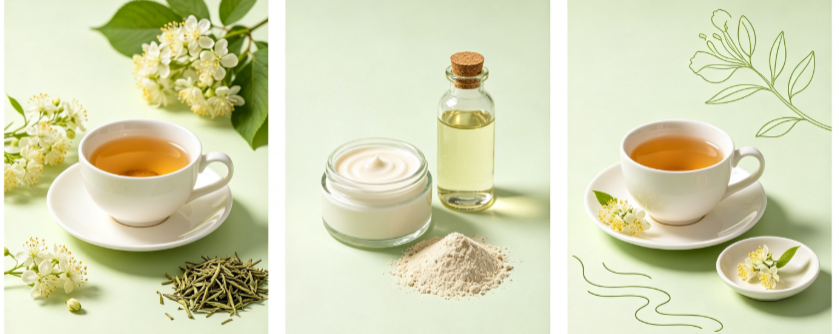
Herbal teas and functional beverages represent the largest volume application globally. Linden flower has a long established role in European wellness tea formulations — typically as a standalone infusion or blended with other calming botanicals. In powder form, linden flower powder works in instant tea mixes, wellness drink sachets, and botanical beverage formulations where the floral flavor and aroma are part of the product experience.
Cosmetics is a significant and growing application. The mucilage fraction from linden flowers gives it genuine skin-soothing properties relevant to sensitive skin formulations — face masks, toners, and calming serums use linden extract as a botanical active. The flavonoid fraction contributes antioxidant activity. European cosmetic brands with botanical heritage positioning have used linden for decades and the ingredient has strong consumer recognition in those markets.
Dietary supplements in capsule or tablet format use linden flower extract primarily in relaxation and sleep support formulations, often alongside other botanical actives like valerian, passionflower, or chamomile. The 10:1 extract ratio format is the most common for this application.
Food flavoring uses the volatile oil fraction — farnesol and other aromatic compounds give linden its characteristic sweet, honey-like floral scent. This shows up in confectionery, liqueurs, and specialty food products where linden flavor is part of the product identity.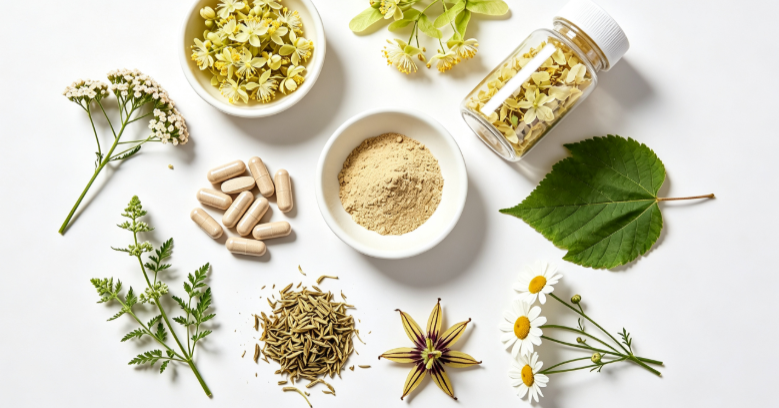
Harvest timing is critical for linden flower quality. The flowers have a short blooming window — typically late spring to early summer depending on the species and region — and need to be collected and dried promptly at peak bloom to preserve volatile oil content. Late-harvest or improperly dried material loses the characteristic aroma that makes linden valuable in flavor and cosmetic applications. A supplier who can confirm harvest date and drying method is demonstrating meaningful supply chain visibility.
Moisture content in the finished linden flower powder should be below 10%. Linden flower is prone to mold and mycotoxin development if moisture management is poor during storage or transport. Lot-specific microbiological testing and aflatoxin screening are appropriate documentation requests for any food or supplement application.
For buyers building products for EU markets, confirming that the material is not treated with ethylene oxide during production, storage, or transport is increasingly important. ETO treatment of herbal materials is banned in the EU and has been the cause of multiple product recalls across botanical ingredient categories in recent years.