
Cauliflower powder has quietly become one of the more interesting vegetable ingredients in food manufacturing. Low-carb food trends pushed it into mainstream visibility, and it has stayed there — not because of a fad, but because it genuinely works in a wide range of formulations where you need vegetable nutrition, mild flavor, and clean-label positioning all at once.
The sourcing conversation is simpler than some botanical extracts but still has real decision points that matter before a purchase order goes out.
This is the first question worth settling.
Spray drying uses heat. Cauliflower juice or puree is atomized into hot air and dried rapidly into powder. Fast, cost-efficient, the standard commercial method for most food manufacturing applications. The trade-off is nutrient loss — heat-sensitive compounds including vitamin C and certain glucosinolates degrade during the process. The resulting powder has good flow properties and reasonable shelf life, and for applications like soups, sauces, seasoning blends, and savory snack coatings where flavor and color are the primary objectives, spray dried works well.
Freeze drying removes moisture at low temperature under vacuum. The cellular structure of the cauliflower is preserved more completely, volatile flavor compounds survive better, and the nutritional profile stays closer to fresh. Freeze dried cauliflower powder reconstitutes with noticeably better texture and a fresher flavor than spray dried material. For premium functional food products, supplements, or any application where "minimally processed" is part of the product story, freeze dried is the right choice. The cost premium is real — typically two to three times the price of spray dried material — but the difference in quality is visible and measurable.
Asking a supplier which drying method they use should be the first question, not an afterthought.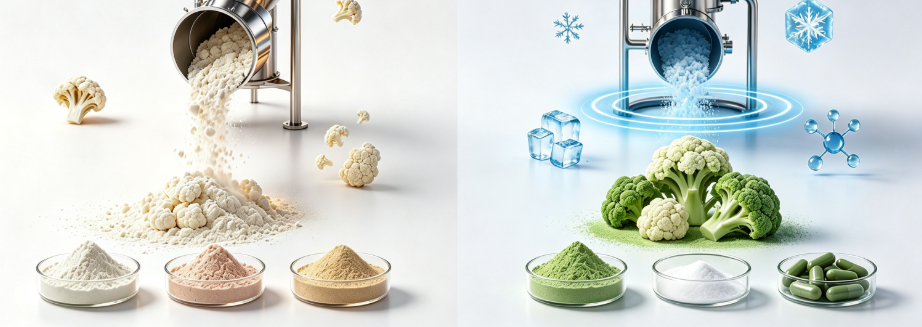
Food manufacturing is by far the dominant application. Soup mixes, instant noodle seasoning packets, ready meal bases, savory snack coatings, pizza crusts, and tortilla formulations all use cauliflower powder as a vegetable ingredient that delivers nutrition and mild flavor without dominating the finished product taste profile. The neutral, slightly sweet flavor of cauliflower makes it more versatile than strongly flavored vegetables like broccoli or spinach in multi-ingredient formulations.
Low-carb and keto product formulations are a significant driver of recent demand growth. Cauliflower powder as a partial flour substitute in baked goods — tortillas, crackers, pizza bases — has moved from specialty health food into mainstream product development. It reduces net carbohydrate content while contributing fiber and a recognizable clean-label vegetable ingredient.
Nutritional supplements and greens powders use cauliflower powder alongside other vegetable and fruit powders in blended formulations. The glucosinolate content — the class of sulfur compounds that gives brassica vegetables their nutritional profile — is a selling point for brands building around cruciferous vegetable benefits.
Organic cauliflower powder is the fastest-growing sub-segment, driven by clean-label demand and younger consumer preferences for transparent sourcing. Organic certification at commercial volumes is available from Chinese, Indian, and European producers, with documentation requirements differing by destination market.
Cosmetics is a smaller but emerging application — cauliflower extract appears in some brightening and antioxidant skincare formulations, particularly in Asian beauty markets where vegetable-derived ingredients have strong positioning. This is a niche application currently but worth noting for formulators exploring plant-based cosmetic actives.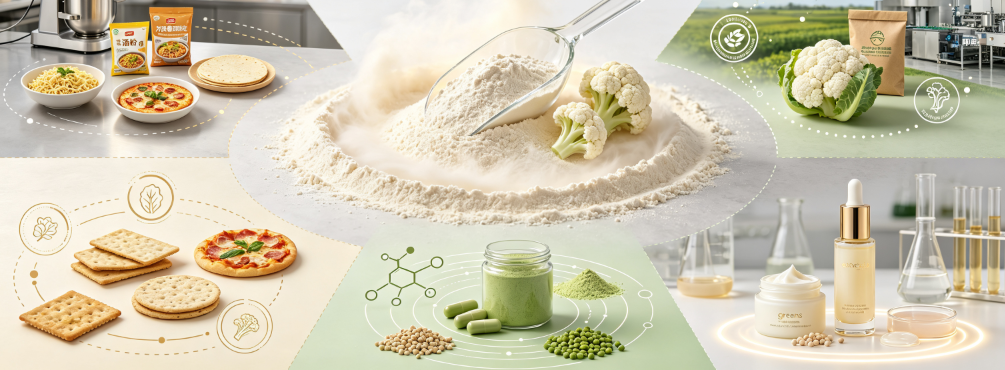
Origin affects both quality and supply chain reliability. China dominates global volume production and offers competitive pricing for food manufacturers. Egypt supplies during European summer gaps from its winter growing season. India is a meaningful producer particularly for organic grades. For buyers who need supply continuity, working with suppliers who can access multiple origins is more resilient than single-origin dependency.
Moisture content is the practical spec that most buyers undervalue. Cauliflower powder absorbs moisture rapidly and requires storage below 60% relative humidity to prevent clumping and maintain free-flowing properties. Moisture barrier packaging — foil laminated, nitrogen flushed — is the appropriate format for any commercial shipment. Powder that arrives already clumped has compromised functionality regardless of what the COA says.
Pesticide residue testing is relevant for conventional cauliflower powder from major producing regions. Buyers sourcing from China should request current pesticide residue screening in line with EU maximum residue level requirements. Lot-specific screening rather than blanket annual certificates is the appropriate documentation standard for food applications entering regulated markets.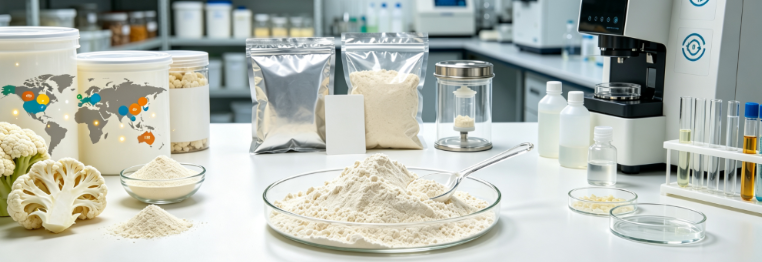
Color specification is a useful quality indicator. Good cauliflower powder should be cream to off-white with consistent color between batches. Yellowing or browning indicates oxidation during processing or improper storage — either signals quality issues worth investigating before approving a supplier.
We supply cauliflower powder with complete COA documentation and clearly defined product specifications. Sample requests and quotes are available directly from our sales team.





