
Most buyers ordering freeze dried pear powder specify a moisture content and a price. The variety of pear used — and by extension the flavor profile, color, and sugar composition of the finished powder — gets left to the supplier’s discretion. That works fine until the product arrives and tastes nothing like what was expected, or until a reformulation requires consistent flavor matching across batches from different origins.
Pear variety is not a detail. It drives the sensory experience of the finished ingredient and should be part of the specification from the start.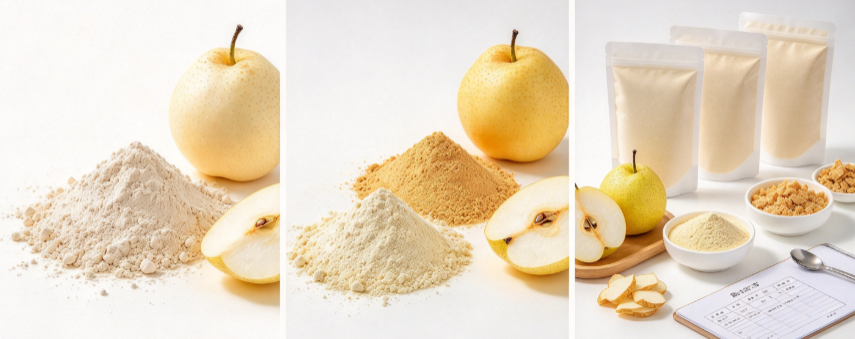
Pyrus communis — the European pear, including varieties like Conference, Bartlett, and Bosc — has the buttery, floral, honey-like flavor most Western consumers picture when they think of pear. The flesh is soft and aromatic when ripe. Freeze dried powder from European varieties carries that characteristic sweetness with delicate top notes that work beautifully in confectionery, bakery, infant food, and premium beverage applications where a classic pear flavor is the objective.
Pyrus pyrifolia — the Asian pear, also called nashi or sand pear — is a different eating and processing experience. Crisper texture, higher water content, a cleaner and slightly less intense flavor that leans more toward fresh and lightly sweet rather than rich and aromatic. Asian pear freeze dried powder is commonly sourced from Chinese production and tends to be more competitively priced than European-origin material. For applications where pear flavor is a supporting note rather than the hero ingredient — smoothie blends, functional drink mixes, neutral-flavored fiber supplements — Asian pear powder is a practical and cost-effective choice.
The problem is that COAs from Chinese freeze dried pear suppliers do not always specify the botanical name or variety, leaving the buyer to assume. If the spec sheet just says “pear powder” without a Pyrus species or variety name, you cannot predict the flavor profile without testing a sample first.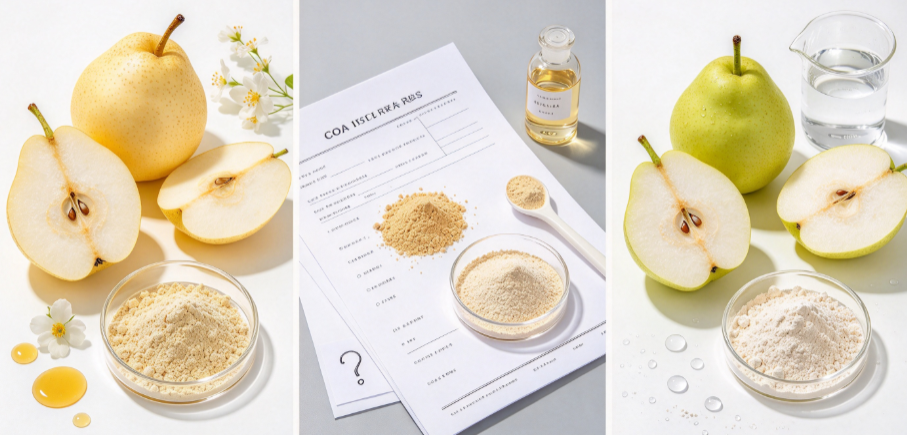
Baby food and toddler nutrition is one of the most demanding and commercially significant applications. Pear is one of the earliest introduced fruits in infant feeding programs globally, known for mild flavor and digestive gentleness. Freeze dried pear powder in baby food pouches, infant cereals, and toddler snack formats needs to meet strict microbiological standards, heavy metal specifications, and pit-free certification — any fragment of seed or stone material in a baby food application is a serious safety issue. Freeze dried pear suppliers for this segment need documented food safety programs beyond standard food-grade certification.
Breakfast cereals and muesli are high-volume applications. Freeze dried pear pieces and powder in premium granola, muesli blends, and breakfast bars add natural sweetness and visible fruit content that supports clean-label positioning. The powder format specifically is used in flavored oat bases and instant porridge formats where fruit flavor needs to be evenly distributed rather than appearing as visible inclusions.
Functional beverages and powder drink mixes use freeze dried pear extract and powder as natural flavor contributors in smoothie blends, wellness drinks, and hydration mixes. The powder dissolves well in both cold and warm water and contributes natural sugar content that reduces the need for added sweeteners in some formulations.
Confectionery is a significant application — macarons, mousse fillings, fruit-flavored coatings, and premium chocolate inclusions all use freeze dried pear powder for flavor intensity and the natural color contribution that synthetic pear flavoring cannot replicate.
Fermented beverages are a growing and interesting segment. Craft cider producers, fruit beer brewers, and kombucha manufacturers use freeze dried pear powder as a fermentable flavor addition. The concentrated sugar content from freeze drying provides genuine fermentable substrate alongside the flavor contribution.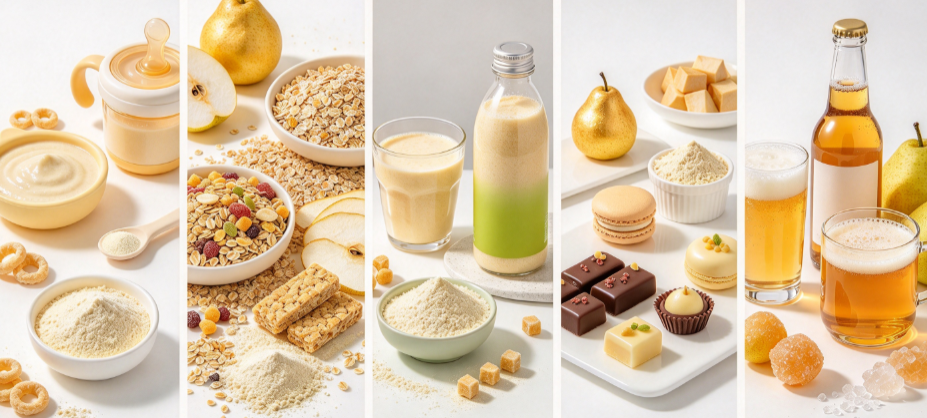
Variety disclosure first. Request the Pyrus species and ideally the cultivar name. Any serious freeze dried pear supplier can tell you exactly what variety they are processing. If they cannot, that is not a supplier with adequate raw material traceability.
Moisture content specification matters for storage and formulation performance. Freeze dried pear powder should run at 8% moisture or below for adequate shelf stability. Higher moisture content accelerates caking and flavor degradation, particularly once packaging is opened. Water activity below 0.35 is the appropriate target for long shelf life in humid climates.
Color consistency is a practical quality indicator. Good freeze dried pear powder is cream to pale golden in color with consistent appearance between batches. Browning indicates oxidation during processing or storage — either insufficient nitrogen flushing during packaging or inadequate temperature control during freeze drying. Significant color variation between lots from the same supplier points to raw material inconsistency.
Pesticide residue testing by lot is relevant for pear from any major producing region. Pear is one of the more pesticide-intensive conventional fruit crops. For organic freeze dried pear powder, full chain-of-custody organic certification from the orchard through the drying facility is the appropriate documentation standard.
Heavy metal testing matters particularly for Chinese-origin material. Lot-specific ICP-MS results for lead, cadmium, arsenic, and mercury should accompany commercial shipments for any food application entering EU, US, or Australian markets.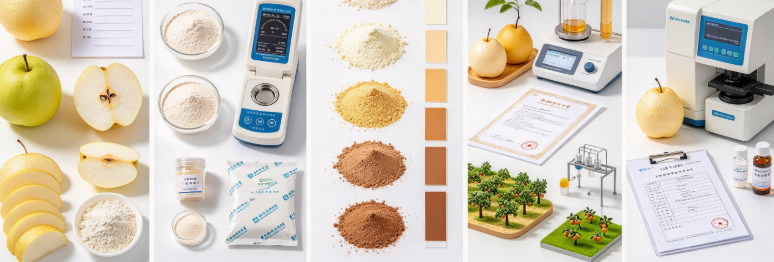
1、What is the difference between freeze dried pear powder and spray dried pear powder?
Freeze drying removes moisture at low temperature under vacuum, preserving flavor, color, and nutritional profile much more completely than spray drying. Spray dried pear powder uses heat, which degrades delicate aromatic compounds and produces a less authentic pear flavor at equivalent inclusion rates.
2、Can freeze dried pear powder be used in infant food formulations?
Yes, but baby food applications require stricter specifications — pit-free certification, tighter microbiological limits, and lower heavy metal thresholds than standard food grade. Confirm these requirements with your supplier before ordering for this application.
3、How does freeze dried pear powder reconstitute in water?
It dissolves readily in both cold and warm water, producing a mildly sweet liquid with natural pear flavor. For beverage applications, a ratio of one to two tablespoons per cup of water delivers a light pear-flavored drink. Adjust concentration based on the sweetness intensity of the specific powder.
We supply freeze dried pear powder with complete COA documentation and clearly defined product specifications. Sample requests and quotes are available directly from our sales team.





