
These two ingredients share a name but almost nothing else. Orange extract — derived from orange peel oil in an alcohol base — is a flavoring agent that delivers the familiar citrus note used in baking and beverages globally. Orange blossom extract comes from the flowers of the orange tree and has a completely different aromatic profile, a different set of active compounds, and a different range of applications.
Getting this confused in a formulation brief or a purchase order produces the wrong ingredient every time.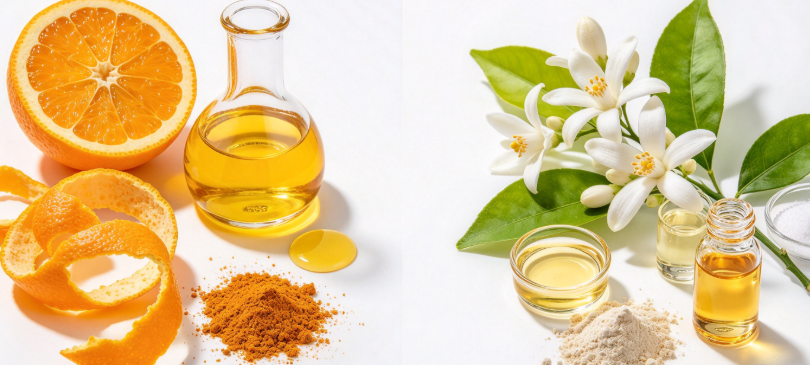
The orange blossom flower used commercially comes primarily from Citrus aurantium — bitter orange — rather than the sweet orange tree used for fruit production. The flowers of Citrus aurantium produce neroli essential oil through steam distillation and orange blossom water through hydrodistillation. Orange blossom extract in dry powder or concentrated liquid form captures the water-soluble aromatic compounds from these flowers — primarily linalool, nerol, geraniol, and indole — along with flavonoids including naringenin and hesperidin that are present in the flower tissue.
Sweet orange blossom from Citrus sinensis is also used commercially, producing a slightly different and generally softer aromatic profile than bitter orange blossom. Premium perfumery and high-end cosmetic applications typically specify Citrus aurantium flower origin because the aromatic complexity is considered superior. Food and beverage applications are less strict about the species distinction.
Orange blossom powder — the dry extract form — is produced either by spray-drying the hydrodistillation water or by extracting the dried flowers directly. The two production routes give different compound profiles. Hydrodistillate-derived powder carries the volatile aromatic fractions. Flower tissue-derived extract carries both the volatile aromatics and the polyphenol fraction from the flower itself. For applications where both fragrance and antioxidant activity are relevant, the flower tissue extraction approach produces a more complete ingredient.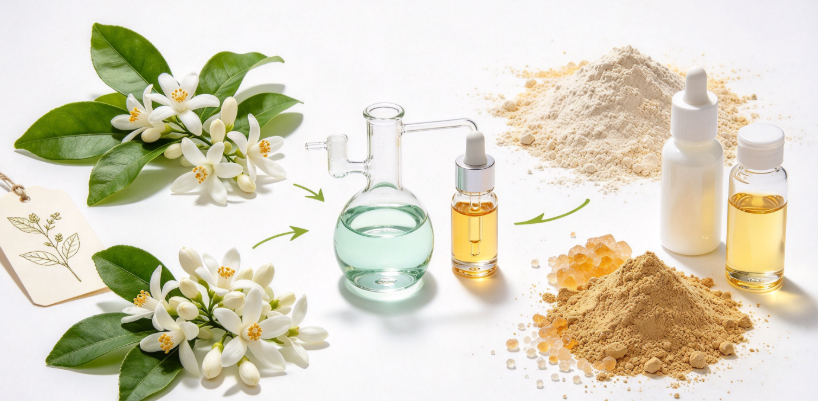
Perfumery and fragrance is the most commercially significant application by volume and value. Orange blossom and neroli are foundational notes in classic fine fragrance — used in some of the most recognized perfumes for over a century. The dry powder extract form is used in solid perfume formats, fragrance sachets, and cosmetic formulations where a liquid essential oil cannot be incorporated directly. This is a premium application where origin traceability and aromatic quality are part of the commercial value of the ingredient.
Food and beverage use of orange blossom is deeply rooted in Middle Eastern and Mediterranean culinary traditions. Orange blossom water is a classic ingredient in Lebanese, Moroccan, North African, and French pastry making — baklava, madeleine, and countless other traditional preparations use it as a flavoring. Orange blossom powder serves the same function in dry formats — cake mixes, spice blends, confectionery coatings, and ready-to-mix dessert formulations where a liquid flavoring is impractical. The floral, slightly honeyed aroma is distinct from citrus peel flavoring and cannot be substituted with orange extract in recipes where the blossom character is the point.
Cosmetics and personal care is a growing segment. Orange blossom extract appears in toners, facial mists, serums, and body care products for its aromatic quality and the skin-conditioning properties attributed to the flavonoid fraction. The ingredient has strong heritage appeal in natural and luxury beauty positioning — orange blossom has been associated with skincare in Southern European and North African traditions for centuries, and that story resonates well with consumers seeking botanical authenticity.
Functional beverages and wellness drinks are a newer application. Orange blossom flavored waters, herbal drink mixes, and botanical cocktail ingredients have grown significantly in the premium beverage segment. The ingredient sits well in the same category as lavender, rose, and elderflower — floral botanicals that add sophistication to the premium non-alcoholic drink space.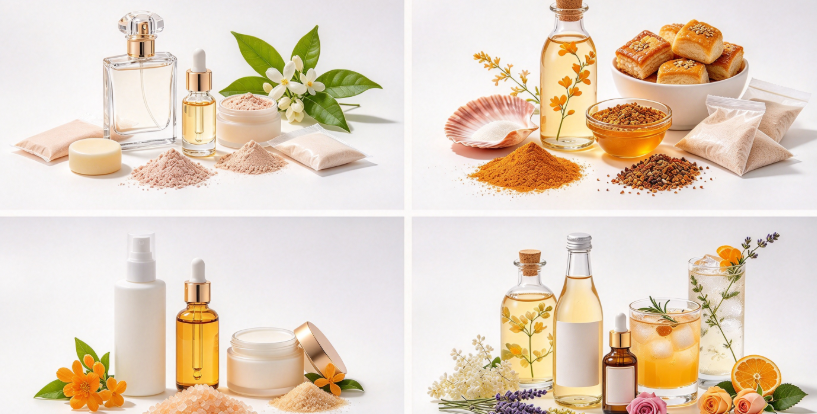
Morocco, Tunisia, Egypt, and southern Spain and France are the primary orange blossom production regions. Moroccan neroli and orange blossom are considered benchmark quality in the fragrance industry. Chinese production exists for extract-grade material at more competitive pricing but the aromatic profile differs from Mediterranean-origin material. For any application where fragrance quality is part of the product value proposition, origin matters and should be specified.
Harvest timing is non-negotiable for orange blossom quality. The flowers have a very short optimal harvest window — typically just a few weeks in spring when the blossoms are fully open but before the petals begin to drop. Material harvested outside this window or improperly handled post-harvest loses the aromatic complexity that makes the ingredient valuable. A supplier who can specify harvest date and region for their raw material is operating at a level of traceability appropriate for a premium botanical.
Extraction method should be disclosed on the COA. Hydrodistillation, steam distillation, solvent extraction, and supercritical CO2 extraction all produce different compound profiles from the same flower material. For cosmetic applications, solvent residue testing is relevant if organic solvent extraction methods are used. For food applications, confirming food-safe extraction solvents is a basic compliance requirement.
For orange blossom powder specifically, moisture barrier packaging is essential. The volatile aromatic compounds in the powder are sensitive to heat, light, and oxygen. Nitrogen-flushed packaging and cool, dark storage conditions are necessary to maintain aromatic quality through the shelf life of the product.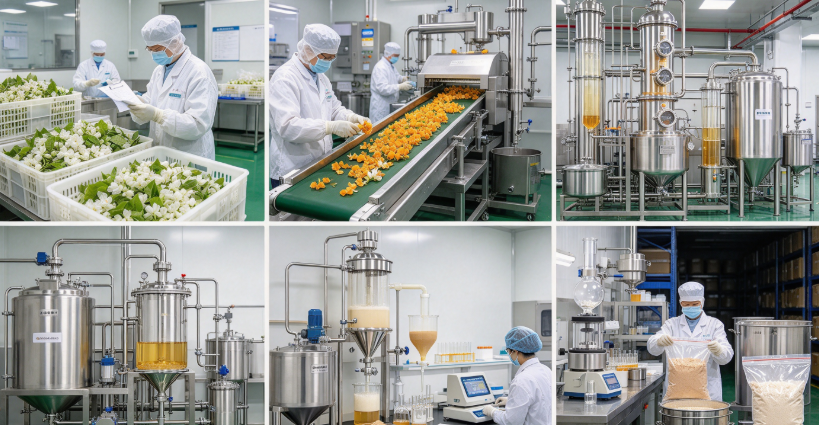
1、What is the difference between orange blossom extract and neroli oil?
Neroli oil is the essential oil obtained by steam distillation of orange blossom flowers — a concentrated volatile fraction in liquid form. Orange blossom extract in powder form captures both volatile and non-volatile compounds from the flower and is a dry ingredient suitable for different formulation applications.
2、Can orange blossom powder be used in food formulations?
Yes. Orange blossom flavor is a traditional ingredient in Middle Eastern and Mediterranean baking and confectionery. The powder form works in dry mixes, confectionery coatings, and spice blends where liquid orange blossom water is impractical.
3、Is Citrus aurantium orange blossom different from Citrus sinensis orange blossom?
Yes. Bitter orange blossom from Citrus aurantium has a more complex and intense aromatic profile preferred in perfumery and premium cosmetics. Sweet orange blossom from Citrus sinensis is softer and is commonly used in food flavoring applications.
We supply orange blossom extract with complete COA documentation and clearly defined product specifications. Sample requests and quotes are available directly from our sales team.





