
Peppermint is one of those ingredients where the naming is loose enough to cause real problems. Buyers ask for peppermint extract and receive peppermint oil. They order peppermint leaf powder expecting a standardized product and get milled dried leaf with no active compound specification. These are not interchangeable materials, and the confusion shows up in formulation failures and wasted procurement cycles.
Getting specific before the purchase order saves a lot of time.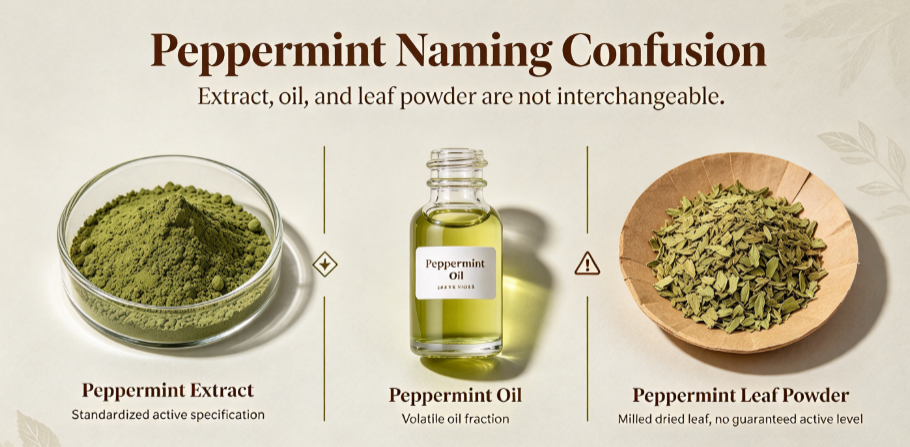
Peppermint essential oil is a volatile oil fraction obtained by steam distillation of Mentha piperita leaves. It is a liquid, not a powder. Menthol content typically runs 40–55% in good-quality oil, with significant variation by origin and cultivar. It is the appropriate form for flavor and fragrance applications, oral care products, topical preparations, and aromatherapy. Not a powder, not a standardized extract — a concentrated liquid with a very high flavor intensity that requires careful handling and low inclusion rates.
Peppermint leaf powder is dried and milled Mentha piperita leaf with no concentration or standardization. Menthol content reflects whatever was naturally present in the dried leaf — typically 0.5–1.5% essential oil by weight. Used in herbal tea blends, supplement capsules where a whole botanical specification is appropriate, and as a functional ingredient in food products where mild peppermint flavor and visible leaf presence contribute to the product story.
Peppermint leaf extract is a concentrated preparation standardized to a defined menthol or total volatile oil percentage. This is the form appropriate for supplement applications where a specific active compound level needs to be consistent across batches, and for cosmetic formulations where a water-soluble or glycerin-based peppermint active is required rather than an oil. Extract ratio products — 5:1, 10:1 — and menthol-standardized extracts both fall into this category but are not identical specifications.
Knowing which of these three your application requires is the first decision, not something to figure out after samples arrive.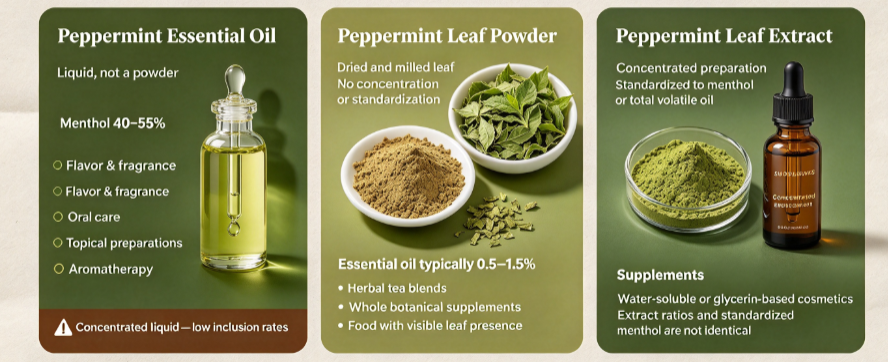
Food and beverage is the largest volume application for peppermint-derived ingredients overall. Confectionery — hard candy, chewing gum, chocolate — uses peppermint oil and extract for flavor delivery. Functional beverages, herbal teas, and digestive drink formats use peppermint leaf powder and water-soluble extracts where the whole-leaf botanical story and mild flavor contribution are appropriate. For beverage applications, water-soluble peppermint extract is more practical than oil-based material because it disperses evenly without creating separation issues.
Oral care is a major commercial segment. Toothpaste, mouthwash, breath fresheners, and lip care products all use peppermint-derived ingredients primarily for the cooling sensation that menthol delivers on mucous membranes. This is one of the few applications where peppermint oil is typically preferred over leaf extract because the volatile menthol delivery is central to the product experience.
Dietary supplements in capsule format use peppermint leaf extract and organic peppermint leaf powder for digestive comfort positioning. Enteric-coated peppermint oil capsules are a separate, more specialized pharmaceutical-adjacent format. For standard supplement capsules, peppermint leaf extract at a standardized menthol percentage gives more consistent dosing than whole leaf powder, which is why it is the preferred form for any product making a specific botanical claim.
Cosmetics and personal care use peppermint leaf extract in toners, cooling serums, scalp treatments, and body care products. The cooling effect of menthol on skin is a genuine sensory attribute that consumers notice and respond to. Water-soluble glycerin-based peppermint leaf extract is the practical form for aqueous cosmetic bases — peppermint oil can be used in oil phases of emulsions but requires emulsification to work in water-based systems.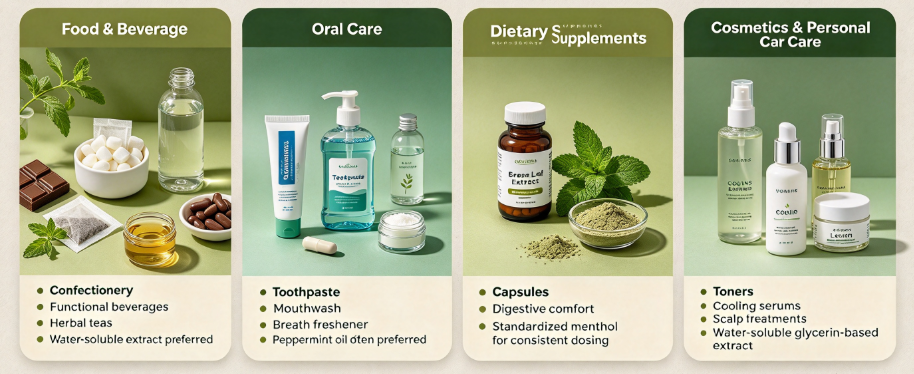
Menthol content is the primary quality specification for peppermint leaf extract standardized products. Request HPLC-verified menthol percentage by batch, not just a general specification. The menthol content in raw Mentha piperita leaf varies by cultivar and harvest timing — leaves harvested just before full flowering contain peak essential oil concentration, and this translates into extract potency.
Origin matters for flavor profile. Indian peppermint — primarily from Uttar Pradesh — has historically dominated global supply and produces high-menthol material. Pacific Northwest production from the United States delivers a different flavor profile with slightly different menthol to menthone ratios that affects the taste experience in food and beverage applications. Chinese production is commercially significant particularly for extract-grade material going into supplement and cosmetic applications.
For organic peppermint leaf, certification documentation needs to trace from cultivation through processing. Peppermint is a crop where pesticide use in conventional agriculture is meaningful, which makes organic certification particularly relevant for clean-label supplement and natural cosmetic applications. Lot-specific pesticide residue screening is appropriate documentation for any food or supplement material entering EU or US markets.
Peppermint leaf pills and capsules specifically need attention to particle size in the extract powder. Fine particle size improves uniformity in capsule filling and reduces segregation in powder blends. If the extract is going directly into a capsule format, requesting a particle size specification from the supplier and confirming it matches your capsule filling equipment’s requirements avoids processing problems at the manufacturing stage.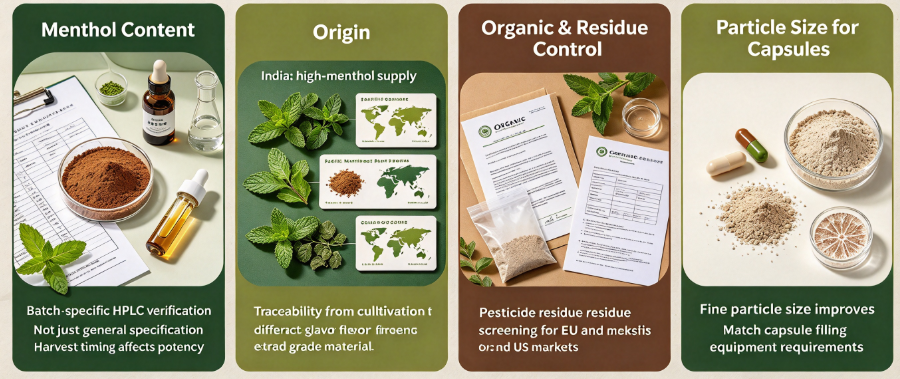
1、What is the menthol content in a standardized peppermint leaf extract?
Commercial peppermint leaf extract standardized products typically contain 1% to 10% menthol depending on concentration. Higher menthol content is available for specific applications. Always confirm HPLC-verified menthol percentage by batch.
2、Can peppermint leaf powder be used in place of peppermint leaf extract in capsules?
Yes, but the active compound content will be lower and more variable. For products requiring consistent menthol dosing per serving, standardized extract is the appropriate choice over whole leaf powder.
3、Is organic peppermint leaf available in commercial quantities for supplement manufacturing?
Yes. Organic-certified peppermint leaf and peppermint leaf extract are commercially available with USDA NOP or EU organic certification. Chain-of-custody documentation from farm through processing is required for finished product organic claims.
We supply peppermint leaf extract with complete COA documentation and clearly defined product specifications. Sample requests and quotes are available directly from our sales team.





