
Raspberry fruit powder looks simple. Red, fragrant, one fruit on the label. Yet it is one of the ingredients where buyers most often receive something different from what they pictured.
Five mistakes show up again and again.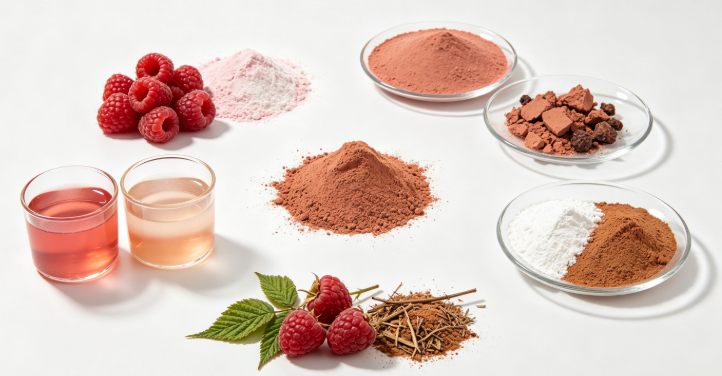
Two products hide behind one name. Whole fruit powder keeps the pulp and often the seeds, so it is coarser, more fibrous and sometimes gritty, with a deeper, jammier flavor. Bakery and bars handle that texture well.
Raspberry juice powder is made from pressed juice, with the seeds removed, then spray dried or freeze dried. It is smoother and dissolves more easily, which suits drinks, sauces and glazes. Pick by the use, not by the price.
Many raspberry powders contain maltodextrin and a little silicon dioxide. One public spec sheet shows around 70 percent fruit juice solids, with the rest carrier. That is not wrong, but you need the number, because it tells you how much real fruit you are paying for.
A low price with no fruit solids figure usually means a lot of carrier. If your label must stay clean, ask for a no carrier grade, and accept that it costs more and cakes more easily.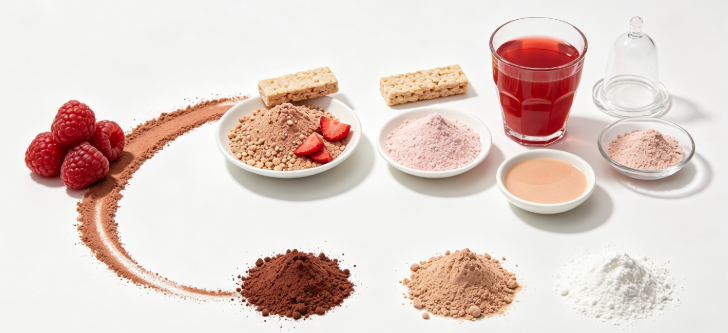
Berry pigments are pH sensitive. They look bright red in acid, drift toward purple as pH climbs, and fade with heat and light. A powder that looks perfect in the bag can turn dull after a bake or a few weeks on the shelf.
Test in your real base, at the real pH, after the real heat step. Ask for particle size as well, since coarse particles can settle in a drink.
A raspberry fruit extract is concentrated and sold on a ratio or a marker such as total anthocyanins. It dissolves better and suits products that need a number on the spec. A powder sold for flavor and color is a different job.
Be careful with the word pure. A pure raspberry extract should list only fruit derived material, so ask for the full ingredient declaration. Liquid flavor extracts for baking are yet another product, so spell out the form on the purchase order.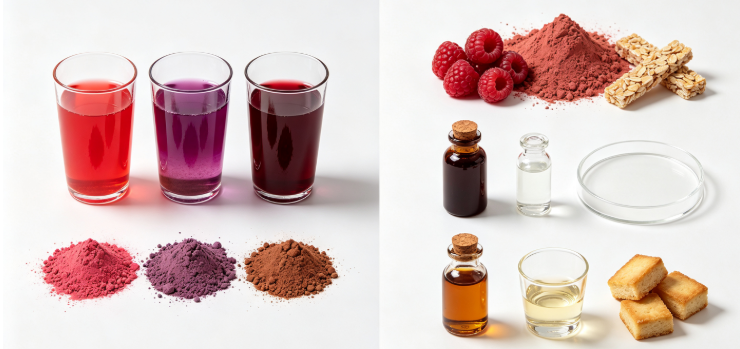
Fruit powders attract moisture and turn sticky. Freeze dried grades usually run below 3 to 5 percent moisture, and water activity should stay low. Foil lined, moisture proof bags in a cool, dark room are the minimum.
Request heavy metals, pesticide and microbial results per lot, since berries are often sprayed in the field. Order a small lot and look at it again after two weeks.
1、What does a typical raspberry juice powder contain besides fruit?
Many grades add maltodextrin and a little silicon dioxide as carrier and anti caking agent. Ask for the fruit solids percentage.
2、Why does the color change in my drink?
Berry pigments shift from red toward purple as pH rises, and they fade with heat and light.
3、How should the powder be stored?
Sealed, moisture proof packaging in a cool, dark place. Low moisture keeps it free flowing.
If you want raspberry with the fruit solids and spec data on paper, take a look at our premium bulk raspberry fruit powder. We supply it with complete COA documentation and clearly defined product specifications. Sample requests and quotes are available directly from our sales team.





