
Mushroom ranges are crowded. Lion’s mane, reishi, cordyceps, turkey tail, and then quietly in the corner, the same white button mushroom people put on pizza. Brands keep asking whether white button mushroom extract belongs in the line, and the honest answer depends on who they are making it for.
The plant material is the same for everyone, Agaricus bisporus. The right grade is not.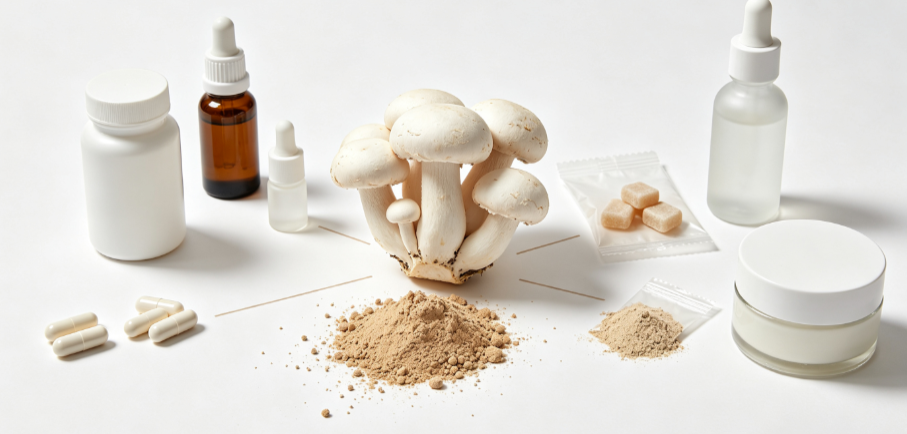
Supplement grades are usually sold on polysaccharide content, from 10 percent up to 50 percent by UV, often next to a 4:1, 5:1 or 10:1 ratio. A white button mushroom supplement is an easy, lower cost way to start a mushroom range, because the crop is farmed at huge scale all year round. Supply is steady and price swings are small compared with wild or slow growing species.
Be careful with the number on the spec. A UV assay counts sugars of every kind, so if your label will state beta glucans, ask for the enzymatic result as well. Make sure the raw material is fruit body, not mycelium grown on grain, since grain adds starch and lowers the real mushroom content.
Then check the powder itself. Mesh size around 80 helps capsule filling, and a 30 percent grade fills differently from a 10 percent grade, so run a trial fill before you set your label dose.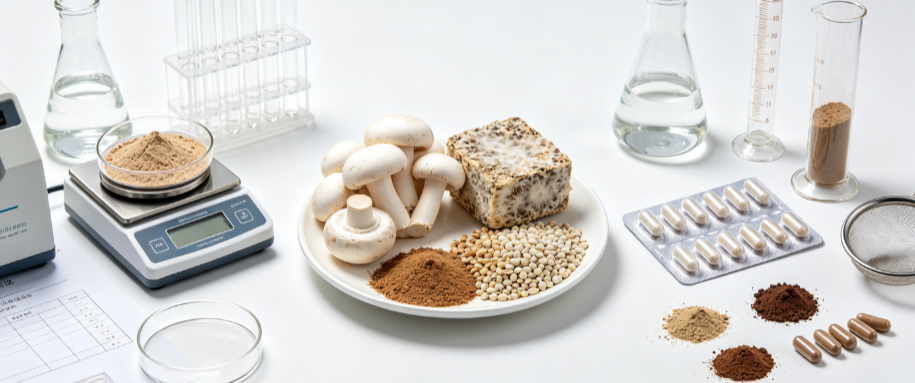
Here the first decision is powder or extract. White button mushroom powder is dried, milled whole mushroom with a mild savory flavor. It suits soups, seasonings, meat blends and protein bars, where it adds body and umami.
Extract is concentrated by hot water or a dual extraction, then dried to a light yellow or brown powder. Water soluble grades work in drink sticks and instant mixes. Ask for solubility data on the exact grade, and look at color in your own base, since brown extract can tint a pale drink.
An extract of white button mushroom also shows up in cosmetic formulas as a plant derived ingredient. Cosmetic work asks for light, consistent color, low microbial counts and good solubility, so request the lighter grades and a per lot microbial report.
Pet and animal nutrition is a separate lane. It needs feed grade paperwork, not just a food grade COA, and the batch sizes are usually much larger.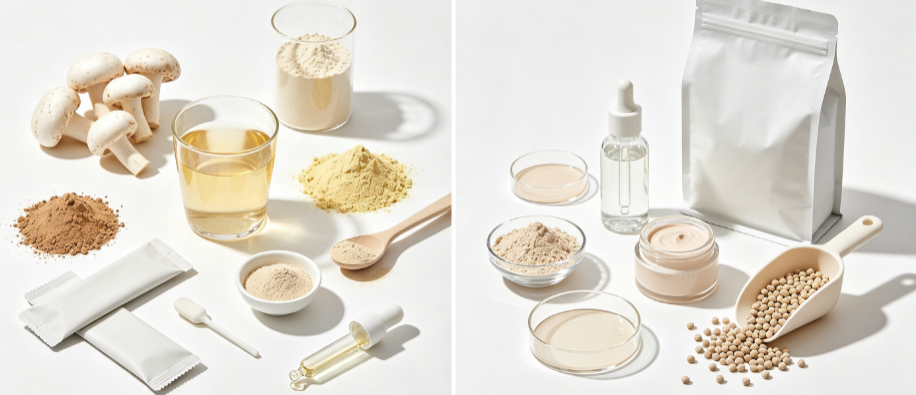
Plant part and Latin name in writing. Extraction method and carrier. The assay method behind every percentage. Color from lot to lot.
Mushrooms can take up heavy metals from the growing substrate, so ask for lead, arsenic, cadmium and mercury results per lot. Add microbial limits, for example yeast and mold at 100 cfu per g or lower, with E. coli and Salmonella absent.
Two years of shelf life is common in sealed, light blocking, moisture proof drums stored cool and dry. Order a small trial lot, keep a retained sample, and compare every shipment to it.
1、What polysaccharide range is common?
Supplement grades usually run from 10 to 50 percent polysaccharides by UV, often alongside a 4:1 to 10:1 ratio.
2、Which part of the mushroom should be used?
The fruit body. Mycelium grown on grain adds starch and lowers real mushroom content.
3、How long does the powder keep?
About two years when sealed, kept cool and dry, and protected from light.
If you want a mushroom extract with the assay method and lot data on paper, take a look at our premium bulk white button mushroom extract. We supply it with complete COA documentation and clearly defined product specifications. Sample requests and quotes are available directly from our sales team.





