Home > Blog > Why Your Mangosteen Extract Isn't Delivering Clinical Results?
Why Your Mangosteen Extract Isn't Delivering Clinical Results?
By GreenHerbJune 24th, 2026
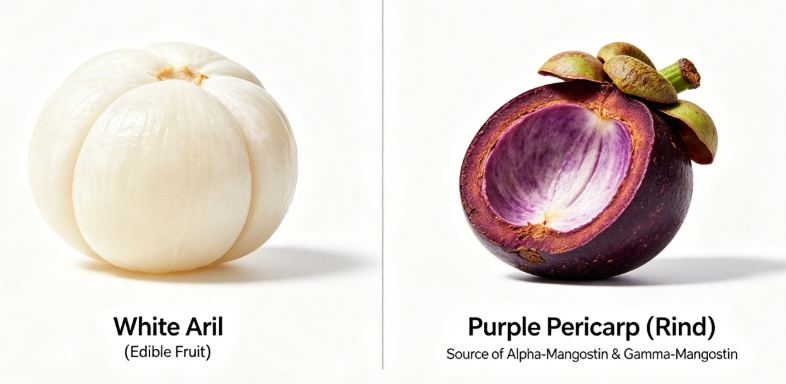
The nutraceutical market is saturated with mangosteen products, but as a supplier who has processed thousands of tons of botanical extracts, I see the same costly mistake repeatedly. Brands pay premiums for "mangosteen fruit powder" and expect anti-inflammatory results, only to find their clinical trials fall flat. The disconnect isn't the dosage—it's the botany. You're likely buying the white pulp (aril) when the pharmacology lives in the purple rind (pericarp).
Most formulators don't realize that the benefits of mangosteen extract are almost entirely dependent on alpha-mangostin and gamma-mangostin. These xanthones are concentrated in the pericarp at levels 10–20 times higher than the edible fruit. If your raw material COA doesn't specify "pericarp extract" or "peel powder," you've purchased expensive sugar. I've watched companies pivot from "mangosteen juice powder" to standardized pericarp extracts and see a 300% increase in in-vitro antioxidant capacity.
Bioavailability: The BCS Class II Problem
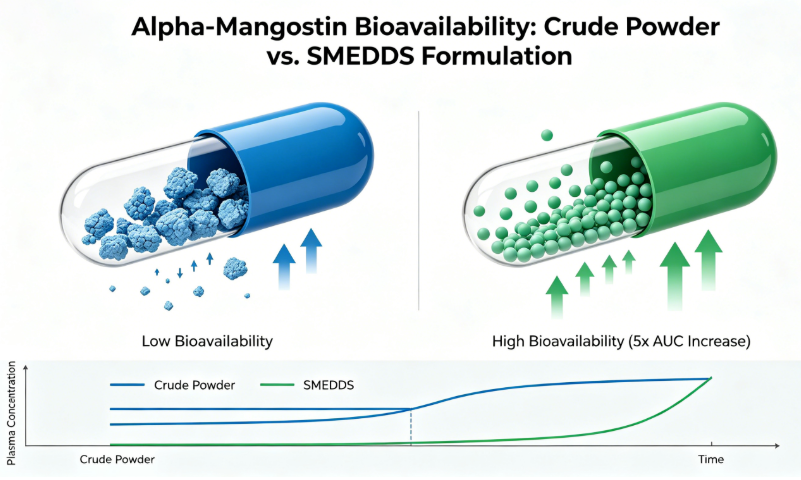
Alpha-mangostin is a nightmare for formulators. It’s a BCS Class II compound—high permeability but abysmal water solubility. If you’re putting crude mangosteen extract powder into a capsule without a delivery system, you’re wasting the API. The molecule crystallizes in the GI tract before it can cross the intestinal barrier.
To fix this, we use self-microemulsifying drug delivery systems (SMEDDS). By embedding the extract in a lipid matrix, we’ve seen the AUC (Area Under the Curve) increase nearly 5-fold compared to a standard suspension. If your product claims "high absorption," you need to decide: are you selling a crude mangosteen fruit powder, or a bioavailable mangosteen extract supplement engineered for lymphatic uptake?
Adulteration and the UV vs. HPLC Trap
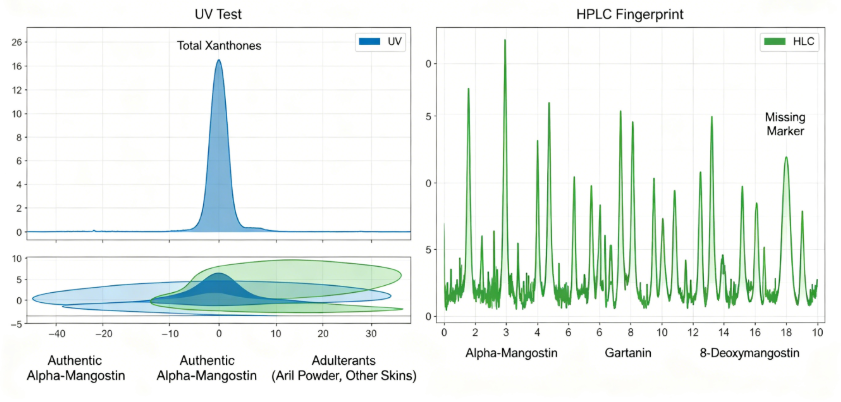
The "Queen of Fruits" label attracts fraud. Suppliers often cut high-cost pericarp with cheap aril powder or other dark-colored fruit skins. Standard UV testing for "xanthones" is useless here—it hydrolyzes everything and overcounts. You need HPLC fingerprinting for alpha-mangostin specifically.
I recently rejected a shipment of mangosteen peel powder because the HPLC profile lacked gartanin and 8-deoxymangostin—key markers for Garcinia mangostana. It was a blend of cheaper fruit extracts. For EU and Japanese imports, this botanical ID is non-negotiable. If your supplier can't show you the full xanthone spectrum, assume you're buying a diluted blend.
Heavy Metals and Regional Sourcing
Mangosteen trees are hyperaccumulators. Grown in the mining-heavy regions of Southeast Asia, they pull lead and cadmium into the pericarp. Since the pericarp is where the xanthones live, this is a critical risk vector. Every batch of our mangosteen extract undergoes ICP-MS testing, with strict limits on heavy metals (Pb < 0.1ppm) to meet EU and USP standards.
If you're sourcing mangosteen extract powder bulk, verify the harvest region and the purification method. Ethanol extraction pulls xanthones cleanly, while water extraction drags in heavy tannins that ruin the mouthfeel and stability of your final product.
Our GMP facility supplies mangosteen extract standardized to 10%-40% alpha-mangostin via HPLC. If you’re ready to move past superfruit marketing and formulate with verified actives, explore our standardized mangosteen extractto review specifications and request a sample.