
Two suppliers. Both selling acerola cherry extract standardized to "natural vitamin C." One quotes 17%, the other quotes 25%. Same fruit, similar price range, very different numbers on the COA.
This happens constantly in the acerola market and there is a straightforward explanation for it — one that most buyers never get told.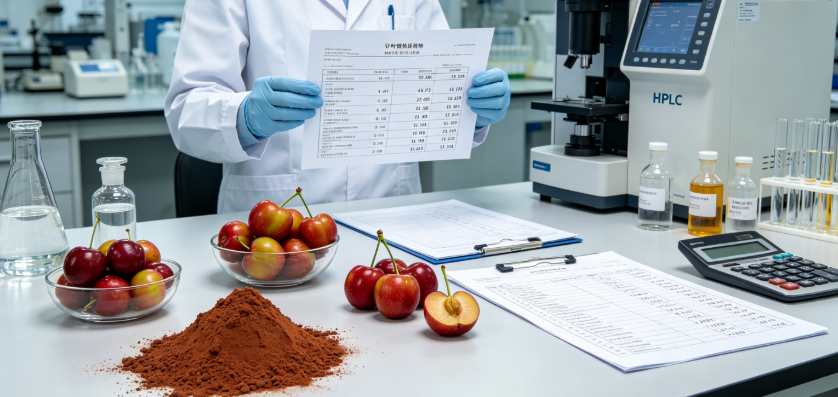
Acerola — Malpighia emarginata — is a tropical fruit where vitamin C content peaks before full ripeness. Unripe or semi-ripe fruit contains significantly higher ascorbic acid concentrations than fully ripe fruit. The trade-off is flavor: green acerola is tart and astringent, ripe acerola is sweeter and more palatable.
For extract production, this creates a real sourcing decision. Manufacturers targeting maximum vitamin C standardization harvest earlier. Those optimizing for flavor — useful for food and beverage applications — harvest at peak ripeness. Neither is wrong, but the finished acerola cherry extract powder will look very different on a COA depending on which approach the producer used.
This is worth asking about directly when evaluating a supplier. "What is your harvest stage protocol?" is a reasonable question and any serious producer will have a clear answer. If they cannot explain their raw material sourcing with that level of detail, the vitamin C percentage on the label is not a number you can rely on batch to batch.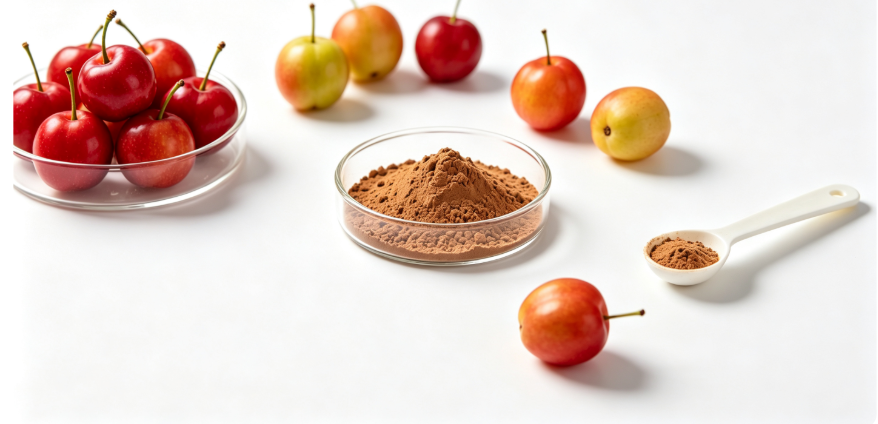
Vitamin C is heat-sensitive. That single fact is the reason freeze-drying and spray-drying produce meaningfully different acerola cherry extract powder products.
Freeze-drying removes moisture at low temperatures under vacuum. The ascorbic acid content is largely preserved because the process avoids heat exposure. Freeze-dried acerola powder is typically 98% pure fruit with minimal carrier additions — just a small amount of silicon dioxide to maintain flow. The result is a concentrated, high-potency powder with genuine flavor and color from the fruit. It is the appropriate format for supplement capsules, nutraceutical formulations, and any application where a vitamin C content claim needs to hold up through shelf life testing.
Spray-drying uses heat, which degrades some of the ascorbic acid during processing. To compensate and hit a target vitamin C percentage, some manufacturers blend in synthetic ascorbic acid after the drying step. The finished product technically meets its label claim but is no longer a pure acerola cherry fruit extract — it is a blend. For clean-label supplement brands or products making a "natural vitamin C" positioning claim, this distinction matters enormously.
The practical way to verify: ask whether the stated vitamin C percentage is achieved from the fruit alone or with post-processing addition of synthetic ascorbic acid. A transparent supplier will tell you without hesitation.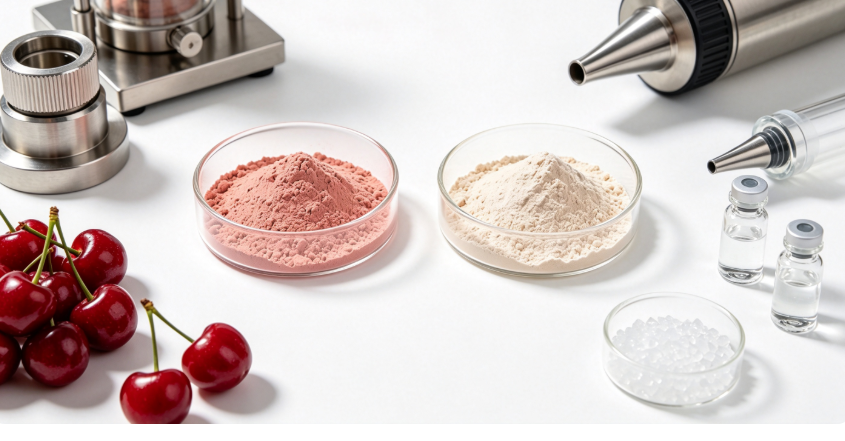
Dietary supplements are the dominant application — capsules and tablets standardized to between 17% and 25% natural vitamin C are the most common commercial formats. Acerola cherry supplement products have strong clean-label appeal because the vitamin C source is recognizable and botanical rather than synthetic, which resonates with consumers who read ingredient labels.
Functional food and beverage is a growing segment. The natural tartness of acerola works well in berry-flavored drink mixes, effervescent tablets, and functional gummies. Spray-dried juice powder with maltodextrin carrier is the standard format for beverage applications because it offers better water solubility and more neutral flavor than freeze-dried extract at higher inclusion rates.
Cosmetics is an active and expanding application. Acerola cherry powder vitamin C content makes it relevant for brightening serums, antioxidant face masks, and vitamin C-fortified skincare where a botanical source ingredient is preferred over synthetic ascorbic acid on the INCI list. The stability challenge is real — vitamin C oxidizes readily in aqueous formulations — so encapsulated or stabilized acerola extract preparations are typically needed for serious cosmetic applications.
Brazil dominates global acerola production, with cultivation concentrated in the northeast of the country. Supply chain vulnerabilities are real — seasonal weather disruptions and harvest timing pressures can affect both availability and pricing, which is worth factoring into procurement planning for anyone buying at volume.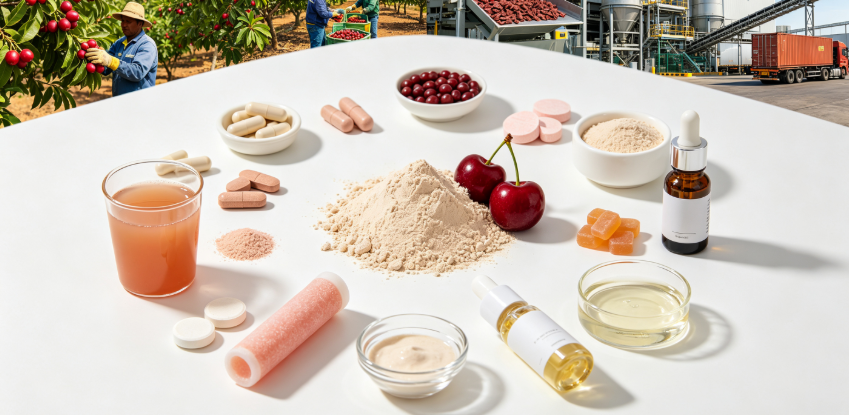
Vitamin C content should be verified by HPLC by batch, not just listed on a general specification sheet. The analytical method matters — titration and HPLC give different readings for the same material. Confirm which method your supplier uses and ensure it matches your quality team's expectations.
Organic certification requires documentation through the full supply chain from Brazilian farm to finished powder. Some suppliers claim organic on the finished product without being able to trace the certification back to the growing operation. For any product making an organic label claim in the US or EU, the chain-of-custody documentation needs to be complete.
Pesticide residue testing is relevant given conventional acerola cultivation practices in Brazil. Lot-specific residue screening is the appropriate standard for food and supplement applications, particularly for EU market entry.
Carrier content should be disclosed. Spray-dried products typically use maltodextrin as a drying aid — the percentage should be specified so formulators know the actual acerola fruit content versus carrier in the finished powder. A product with 30% maltodextrin and 70% acerola juice delivers a different functional profile than a freeze-dried pure fruit powder, even if the vitamin C percentages look similar.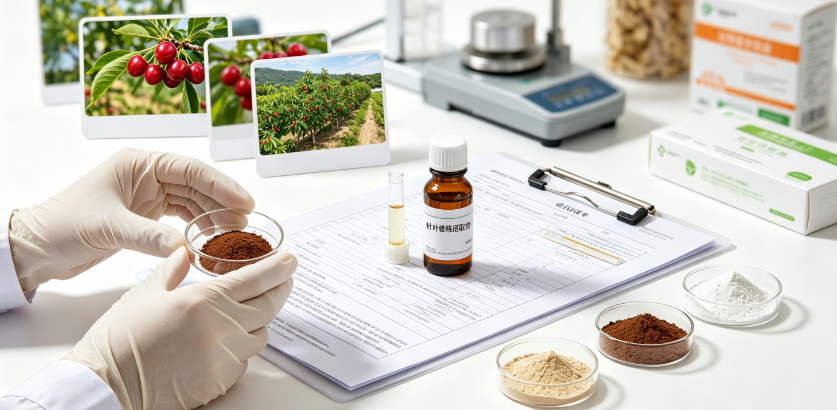
What vitamin C percentage is standard for acerola cherry extract powder?
Commercial acerola cherry extract is typically standardized at 17% to 25% natural vitamin C by HPLC. Higher concentrations exist but may involve post-processing addition of synthetic ascorbic acid.
What is the difference between acerola cherry extract and acerola juice powder?
Extract is standardized to a specific vitamin C percentage from concentrated fruit processing. Juice powder is spray-dried acerola juice with a carrier, typically maltodextrin, offering better water solubility but lower vitamin C concentration.
Can pure acerola cherry powder be used in cosmetic formulations?
Yes, but stability is a challenge. Encapsulated or stabilized preparations are typically needed for aqueous cosmetic bases where oxidation of ascorbic acid would otherwise reduce shelf life.
We supply acerola cherry extract with complete COA documentation and clearly defined product specifications. Sample requests and quotes are available directly from our sales team.





