
Sunflower is one of those crops where the commercial derivative landscape gets messy fast. Oil, seed powder, protein concentrate, lecithin, extract standardized for tocopherols, extract standardized for chlorogenic acid — they all come from the same plant and they all end up in ingredient catalogs under variations of "sunflower extract." A buyer who does not know exactly what they need can easily order the wrong product and not realize it until formulation.
This is worth untangling before the purchase order goes out.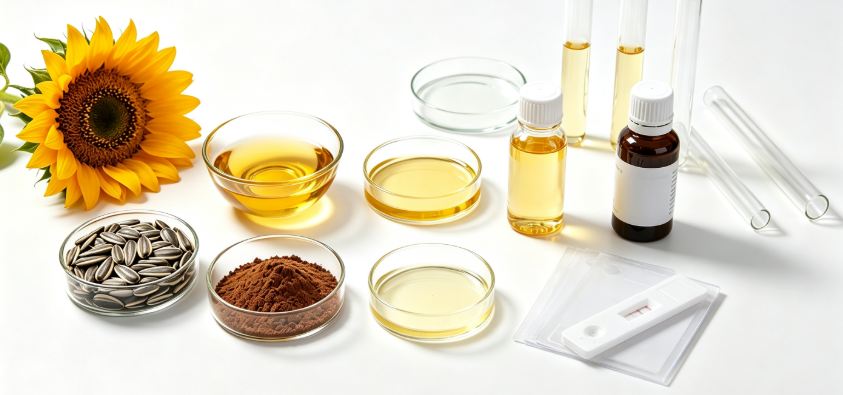
Sunflower extract in the botanical sense typically refers to a standardized extract from sunflower seed or flower, concentrated for specific active compounds. The most common standardization markers are chlorogenic acid — relevant for antioxidant applications — and tocopherols, particularly natural vitamin E fractions. This is what supplement and cosmetic formulators usually mean when they specify sunflower extract on an ingredient list. It is a concentrated, functional ingredient with defined active compound content verified by HPLC.
Sunflower seed powder is a different product entirely. It is mechanically milled sunflower seed — hull removed, seed ground to a fine powder — with the full nutritional profile of the seed intact. Protein, fat, fiber, minerals, and naturally occurring tocopherols are all present but not concentrated or standardized. It is used in food applications where whole seed nutrition and texture are the objective, not a specific compound percentage.
Sunflower protein powder is what remains after oil is extracted from the seed. The defatted seed cake is processed further to concentrate the protein fraction, typically reaching 50–70% protein content. It is showing up in plant-based food formulations as a non-soy, non-pea protein alternative — useful for brands trying to diversify away from the two dominant plant protein sources. The amino acid profile is decent though not complete, with lower lysine content than soy protein, which is worth noting for formulations making protein quality claims.
Ordering "sunflower powder" without specifying which type is a reliable way to get three different quotes that cannot be meaningfully compared.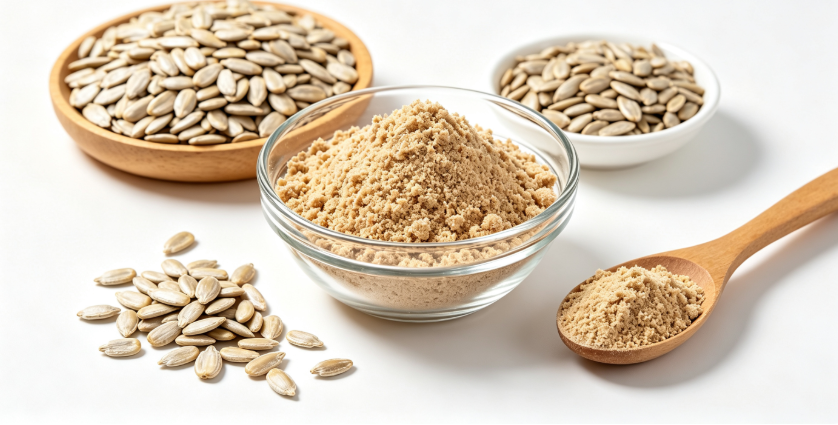
Cosmetics is the largest application for standardized sunflower extract. Natural vitamin E from sunflower — d-alpha tocopherol and mixed tocopherols — is a well-established cosmetic active used in anti-aging formulations, skin barrier support products, and as an antioxidant stabilizer in oil-based formulations. Cold-pressed sunflower extraction preserves tocopherol content better than solvent extraction, which is why cosmetic-grade sunflower extract commands a price premium over standard grades. Personal care and cosmetics applications for sunflower-derived ingredients are growing faster than any other segment.
Dietary supplements use sunflower extract primarily as a natural vitamin E source and as a non-soy alternative for phosphatidylcholine and other phospholipids. The non-GMO positioning is genuine here — sunflower is not a major GMO crop, which makes sunflower-derived lecithin and extract a practical choice for brands that need non-GMO certification without the documentation complexity that comes with soy-derived ingredients.
Food fortification is a smaller but active application. Sunflower seed powder works in baked goods, snack bars, and breakfast cereals as a nutritional ingredient. Sunflower protein powder is entering meat analog and plant-based dairy formulations as formulators look for protein sources beyond soy and pea. The neutral flavor profile of sunflower protein is a genuine advantage in applications where soy or pea beany notes create sensory challenges.
Industrial applications — biodiesel, biolubricants, oleochemical production — represent significant volume for sunflower derivatives but operate on entirely different procurement dynamics than food and supplement applications.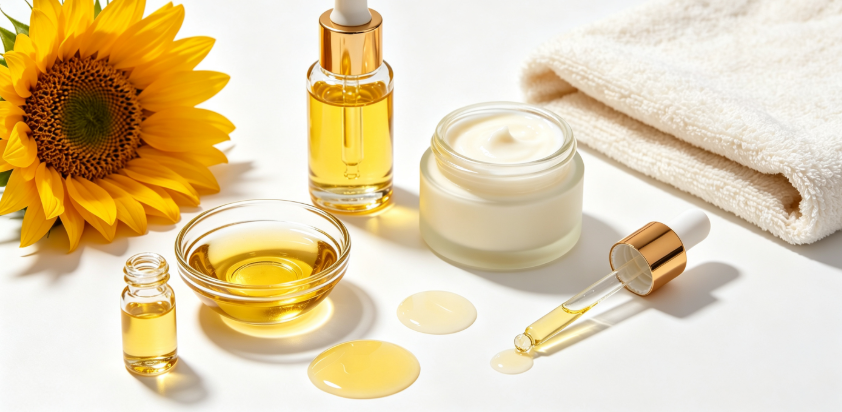
Ukraine and Russia together account for over 60% of global sunflower seed production. That geographic concentration is a supply chain risk that became very visible after 2022 and has pushed buyers toward sourcing diversification — EU origins including Bulgaria, Romania, and Hungary, and southern hemisphere supply from Argentina. For anyone buying sunflower-derived ingredients at meaningful volume, origin diversification is worth building into procurement strategy rather than leaving as a reactive response to disruption.
High-oleic versus standard linoleic sunflower is a specification distinction that matters for several applications. Standard sunflower is high in linoleic acid — a polyunsaturated omega-6 fat — which has good nutritional positioning but lower oxidative stability. High-oleic varieties have been bred to shift the fatty acid profile toward oleic acid, dramatically improving oxidative stability and shelf life. For any sunflower extract application involving heat or extended shelf life requirements, high-oleic sourcing is the appropriate choice even though it costs more.
For sunflower protein powder specifically, solvent residue testing is relevant if the protein was produced from hexane-extracted seed cake. Residual hexane limits in food-grade protein are regulated and any supplier of food-grade material should have routine residual solvent testing as part of their quality program.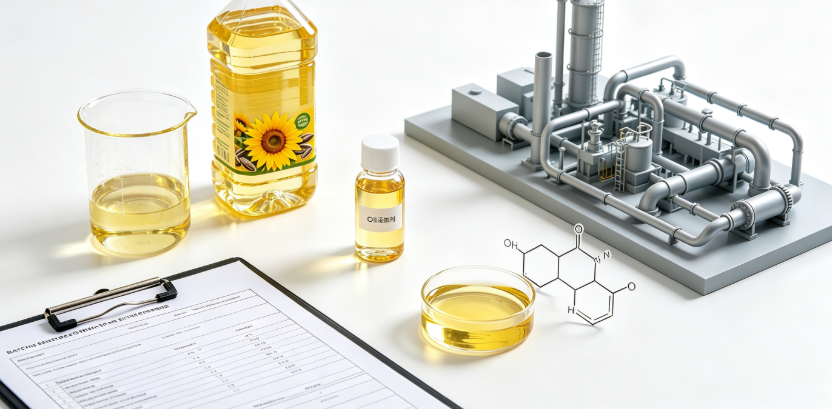
We supply sunflower extract with complete COA documentation and clearly defined product specifications. Sample requests and quotes are available directly from our sales team.


