
Monk fruit powder is having a serious moment in the food and beverage industry, and the supply side has not kept pace with buyer sophistication. Most people sourcing it for the first time see a price list with different mogroside percentages and pick somewhere in the middle without really knowing what they are buying.
That works until it does not — usually when the sweetness level in a finished product is inconsistent batch to batch, or when a clean-label claim gets questioned at the regulatory review stage.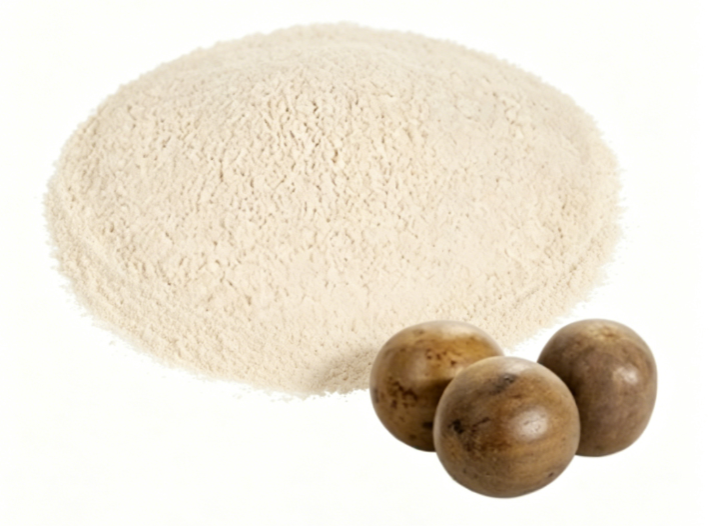
This is the spec confusion that causes the most problems.
Monk fruit contains a family of compounds called mogrosides — numbered I through VI depending on the number of glucose units attached. Mogroside V is the primary sweet compound and the one responsible for monk fruit's intense sweetness, which runs roughly 150 to 250 times sweeter than sucrose depending on concentration and purity.
Total mogrosides and mogroside V are two different specifications. A product labeled "50% mogrosides" might contain a relatively modest amount of mogroside V alongside the other less-sweet mogroside fractions. A product labeled "50% mogroside V" is a much more concentrated sweetness source. Same headline number, very different sweetness delivery and price point.
For most food and beverage applications, mogroside V content is the relevant spec. For supplement applications where monk fruit extract appears as an antioxidant ingredient rather than a sweetener, total mogroside content is more appropriate. Knowing which you need before you start comparing quotes prevents a lot of confusion.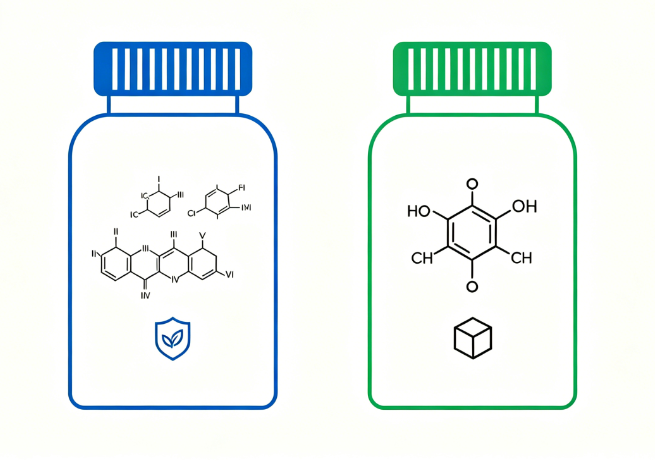
Beverages are the largest application category by volume. Functional drinks, flavored water, energy drinks, and ready-to-mix powder formats all use monk fruit extract powder for its zero-calorie sweetness profile and clean-label appeal. Heat stability is a genuine advantage here — mogroside V survives pasteurization and retort processing without significant degradation, which makes it practical for applications that would destroy stevia glycosides.
Baked goods are a growing segment. Pure monk fruit powder blended with bulking agents like erythritol or inulin works as a direct sugar substitute in cookies, protein bars, and specialty bakery products. On its own, monk fruit powder lacks the bulk of sugar and needs a carrier for volume-sensitive recipes — something worth factoring into formulation planning.
Dairy and plant-based alternatives use monk fruit for sweetening yogurt, flavored milk products, and dairy-free beverages where a natural sweetener claim supports premium positioning. The flavor profile of high-purity monk fruit extract is cleaner than stevia at low inclusion rates, with less of the lingering aftertaste that some consumers notice with high-concentration steviol glycosides.
Dietary supplements use monk fruit as a sweetening agent in gummies, chewables, and flavored powders where a zero-sugar label matters to the target consumer.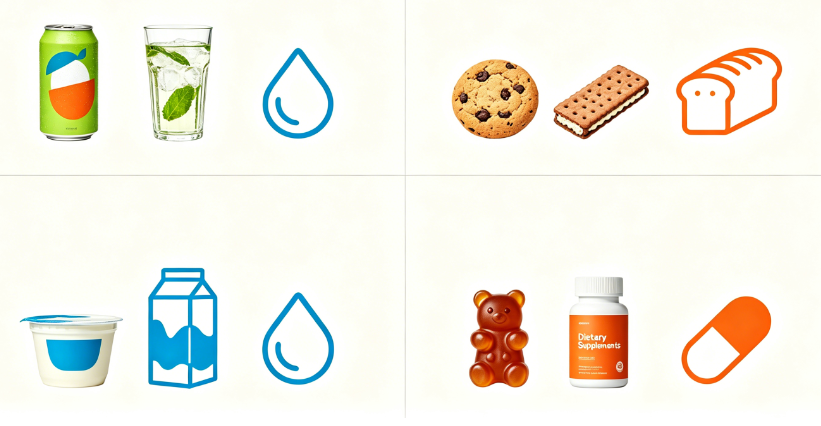
Monk fruit — Siraitia grosvenorii — is cultivated almost exclusively in Guangxi province in southern China. The supply chain is geographically concentrated in a way that few other botanical ingredients are, which means harvest conditions in one region affect global availability and pricing in a direct way. Buyers who want supply security build relationships with manufacturers who have direct farmer partnerships rather than relying on spot market procurement.
Processing method affects the final product significantly. Spray-dried monk fruit extract powder from concentrated juice produces a different particle profile and solubility characteristic than freeze-dried material. For most commercial food applications, spray-dried is the standard. For premium supplement or specialty food applications where flavor intensity and minimal processing are important, freeze-dried material is worth the cost premium.
Purity verification matters. A COA showing "mogroside V 50%" needs to be verified by HPLC with the method specified — UV spectrophotometry and HPLC give different readings for the same material and are not directly comparable. Lot-specific testing rather than blanket spec sheets is the standard worth insisting on for any volume purchase.
Regulatory status varies by market. In the US, monk fruit extract is generally recognized as safe. In the EU, it was not authorized as a food additive until the UK High Court in March 2024 ruled that monk fruit decoctions are not classified as novel food, opening the UK market more clearly. EU market entry still requires navigating country-specific frameworks. Any brand selling into multiple markets should confirm the regulatory status for monk fruit in each target country before committing to a formulation.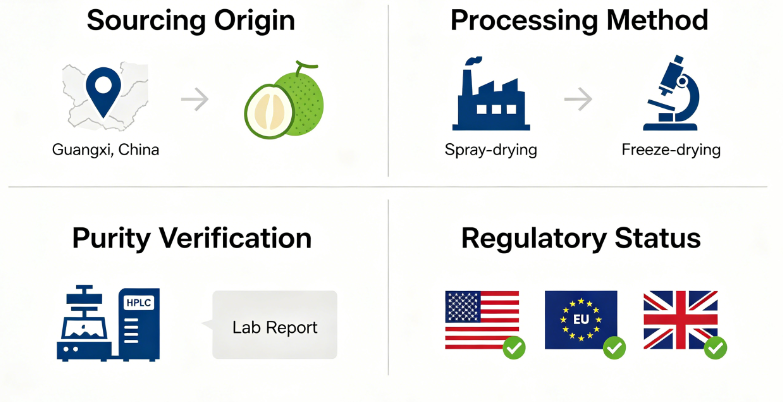
What is the difference between monk fruit powder and monk fruit extract powder?
Monk fruit powder typically refers to dried whole fruit powder with low mogroside concentration. Monk fruit extract powder is standardized to a specific mogroside V percentage and is far more potent as a sweetener.
How sweet is monk fruit extract compared to sugar?
Mogroside V is approximately 150 to 250 times sweeter than sucrose depending on purity and concentration. Usage rates in formulations are typically a fraction of a percent.
Can monk fruit powder be used in baking?
Yes, but it lacks the bulk of sugar. It is usually blended with a bulking agent like erythritol or inulin to function as a direct sugar substitute in volume-sensitive recipes.
We supply monk fruit powder with complete COA documentation and clearly defined product specifications. Sample requests and quotes are available directly from our sales team.


